


7 Best Products for Fast Hair Drying
Table of Contents
- Why Fast Hair Drying Matters for Your Routine
- The CHASKA Air Styler: All-in-One Fast Drying Solution
- How to Dry Hair Faster Without Heat Damage
- Quick Dry Hair Spray and Styling Products That Speed Results
- Matching Fast-Drying Products to Your Hair Type
- Ingredients and Technology That Reduce Drying Time
- Environmental and Scalp Health Considerations
- Conclusion
- Frequently Asked Questions
Last Updated: September 19, 2026
Why Fast Hair Drying Matters for Your Routine
Fast hair drying saves time while protecting your hair from damage, whether you're juggling kids, catching a flight, or simply tired of lengthy routines.
Traditional blow dryers are clunky and time-consuming, and using multiple tools, dryer, straightener, curling iron, multiplies heat exposure and drying time. This guide shows how to dry hair faster without sacrificing quality.
The CHASKA Air Styler: All-in-One Fast Drying Solution
The CHASKA Air Styler consolidates drying, straightening, and curling into one device, eliminating tool-switching that wastes time.

Twin Turbo fans built into the plates double drying power, while plasma technology generates negatively charged ions that seal the hair cuticle and reduce frizz, eliminating post-styling frizz-fighting.
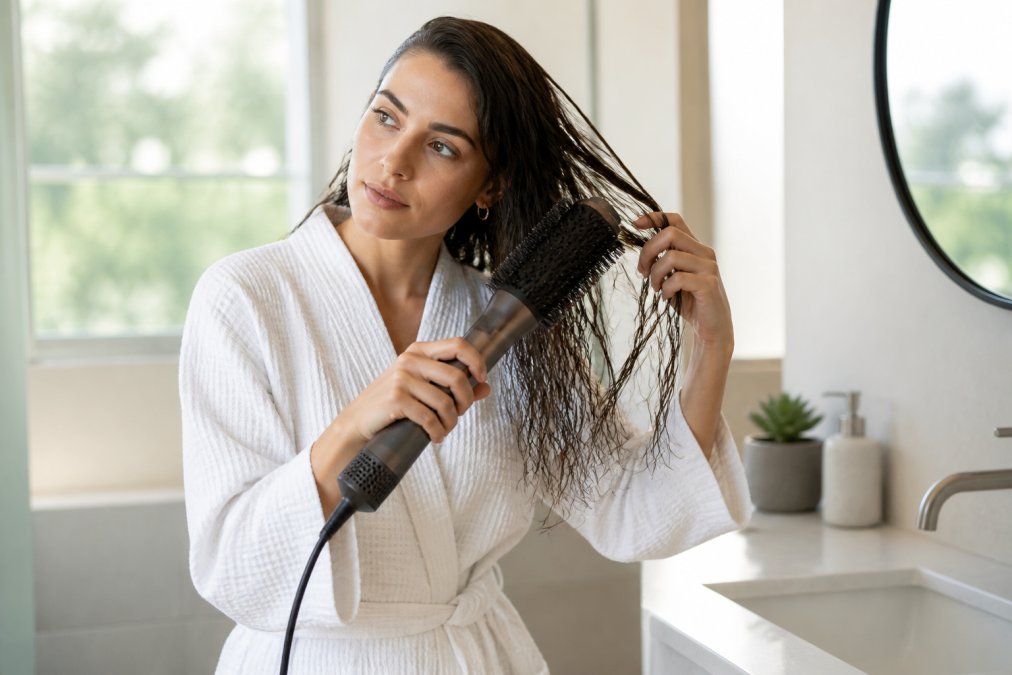
You dry your hair once and it's already straightened or textured, no second pass needed. The device works on all hair types because airflow and heat settings adjust to your styling technique.
At $249, it saves time and bathroom space by consolidating three tools.
How to Dry Hair Faster Without Heat Damage
Speed and protection work together: moderate heat with strong airflow dries faster than high heat alone while preventing cuticle damage.
Use a microfiber towel or cotton t-shirt to remove excess water before heat-drying, this cuts drying time by 30-40%. Squeeze gently; don't rub or twist.
Apply leave-in conditioner or styling cream to damp hair to create a protective barrier and reduce direct heat exposure.
Use medium heat with strong airflow, it dries faster overall than high heat because air movement matters more than raw temperature.
Section hair into four quadrants and dry one at a time with the tool angled downward, working from roots to ends. This prevents repeated heat exposure that causes damage.
Quick Dry Hair Spray and Styling Products That Speed Results
Quick-dry products work by accelerating evaporation, reducing water-binding capacity, and preventing moisture re-absorption. Understanding these mechanisms helps you choose products that genuinely cut drying time.
Silicone-based quick-dry sprays coat hair with a hydrophobic layer that causes water to bead and slide off, reducing drying time by 15-25%. Apply to damp hair before drying. Trade-off: they can build up with daily use, requiring weekly clarifying shampoo.
Polymer-based styling products (acrylates, copolymers, and PVP) provide hold while allowing faster evaporation than natural oils. These are lighter than silicones and don't create the same buildup risk. Texturizing mousses fall into this category, they're engineered to dry quickly themselves while helping hair shed water faster. Apply mousse to damp roots and mid-lengths before drying; it adds volume and texture simultaneously, eliminating the need for a second styling pass.
Humectant-based leave-in conditioners (containing glycerin, panthenol, or propylene glycol) seem counterintuitive for speed, but they actually work by controlling moisture absorption. These ingredients draw moisture into the hair shaft in a controlled way, preventing the over-dried, frizzy state that occurs when hair loses water too quickly. Apply sparingly to damp hair, too much humectant in humid conditions can cause the hair to absorb atmospheric moisture and frizz, negating the speed benefit.
Lightweight styling creams (water-based with minimal oil content) balance protection and speed. Look for formulas listing water as the first ingredient, followed by lightweight emollients like cetyl alcohol or stearyl alcohol rather than heavy oils. These provide frizz control and definition without trapping moisture. Apply to damp hair in quarter-sized amounts; more product means longer drying time because you're adding water-weight to the hair.
Application timing matters as much as product choice. Apply quick-dry products to damp hair, not soaking wet hair. Soaking wet hair requires so much evaporation time that even the best products can't compensate. Pre-dry with a microfiber towel first to remove 40-50% of water weight, then apply products to the remaining dampness. This is where most people lose time, they apply products to dripping-wet hair and wonder why drying still takes forever.
Avoid mixing incompatible product types. Silicone sprays and heavy oils together create a barrier that traps moisture and extends drying time. If you use a silicone spray, skip the oil. If you use a humectant leave-in, use it alone or pair it with a lightweight cream, not both. Layering too many products defeats the speed advantage.
CHASKA Air Styler - 3-in-1 Hair Dryer →
Matching Fast-Drying Products to Your Hair Type
Hair texture determines which products will actually speed up your drying. Fine hair needs lightweight formulas that won't weigh it down. Thick or curly hair needs more moisture and hold to prevent frizz.
For fine hair, use a volumizing mousse before drying. Skip heavy creams. A lightweight leave-in spray conditioner is enough moisture protection. Your hair dries quickly naturally, so focus on products that add texture without weight.
For thick or curly hair, use a leave-in conditioner or curl-defining cream. These hair types need moisture to prevent frizz during drying. The product creates a protective layer that lets the hair dry faster because it's not fighting dryness. Apply more generously than you would to fine hair. Consistent hydration remains the most effective way to manage the underlying causes of dry hair routines that might otherwise compromise the integrity of your strands during the heat styling process.
For wavy hair, a texturizing cream works well. It enhances your natural wave pattern while you dry, which means less time spent trying to create texture afterward. Apply to damp hair and dry with a diffuser attachment if your tool has one.
For straight or coarse hair, a smoothing cream prevents frizz while allowing fast drying. These products work by sealing the cuticle, which helps water evaporate more efficiently. The smoothness also means less friction during drying, which speeds the process.
Ingredients and Technology That Reduce Drying Time
Ionic technology is real and worth understanding. Negatively charged ions break water molecules into smaller particles, which evaporate faster. This is why ionic blow dryers and styling tools genuinely reduce drying time, it's not marketing. The CHASKA Air Styler uses plasma technology, which operates on the same principle but more aggressively, creating millions of ions that penetrate the hair cuticle.
Silicones in styling products reduce friction and help water bead off the hair surface. They're not harmful to your hair when used correctly. They actually protect the cuticle during drying by creating a smooth surface that water slides off rather than soaking into.
Polymers in styling products provide hold and texture while allowing faster drying. They're lighter than natural oils and don't trap moisture the way heavier products do. Look for acrylates or copolymers in product ingredient lists if you want fast-drying formulas.
Proteins in leave-in conditioners and styling creams strengthen the hair shaft, which reduces breakage during drying. They also help the hair retain moisture internally while the surface dries, which prevents the over-dried, brittle feeling that comes from aggressive drying.
Environmental and Scalp Health Considerations
Fast drying isn't just about speed and aesthetics, it directly impacts scalp health and your environmental footprint.
Scalp health during fast drying. Direct heat on the scalp disrupts the microbiome and oil balance. When you blow-dry with the nozzle pointed at your roots, you're essentially dehydrating the scalp surface while potentially overheating the skin underneath. This triggers two problems: the scalp compensates by producing excess sebum (making hair greasy faster), and the heat can irritate the skin, causing itching or flaking. The solution is simple but often overlooked: keep any drying tool at least two inches away from the scalp and move it constantly. Direct the airflow downward along the hair shaft, not perpendicular to the scalp. If you're using a multi-function tool like the CHASKA Air Styler, the same rule applies, start drying from mid-length downward, and only approach the roots in the final passes when the hair is mostly dry and the tool's heat output matters less.
Fungal and bacterial risk during extended air-drying.
Seasonal adjustments for scalp and drying efficiency. Humidity and temperature dramatically affect how long hair takes to dry and how your scalp responds.
Conclusion
Fast hair drying doesn't mean sacrificing quality. The right combination of tool and products cuts your styling time dramatically while protecting your hair from damage. The CHASKA Air Styler delivers this by consolidating three functions into one device with plasma technology that speeds drying while sealing moisture into the hair cuticle. Paired with lightweight, hair-type-appropriate products, you'll see results in less time than traditional multi-tool approaches.
Frequently Asked Questions
What is the best product to make hair dry faster?
The CHASKA Air Styler stands out as a comprehensive solution for fast hair drying. Its Twin Turbo fans and plasma technology deliver direct airflow through the plates, doubling drying power compared to standard tools. For those preferring a multi-step approach, combining a high-wattage ionic hair dryer with a quick-dry spray can cut drying time significantly. The key is matching the product to your hair texture and using proper technique, applying products to damp rather than soaking-wet hair accelerates evaporation.
How can I dry my hair extremely fast without heat damage?
Start by microfiber towel-wrapping your hair for 10-15 minutes to remove excess moisture before any heat exposure. Use products with ionic technology, which seals the cuticle and reduces frizz while minimizing heat stress. Apply leave-in conditioner or styling creams to damp hair to create a protective barrier. Choose tools with adjustable heat settings and keep the dryer moving constantly rather than concentrating heat on one spot. Plasma technology, like that in the CHASKA Air Styler, generates negatively charged ions that penetrate the cuticle while sealing in moisture, reducing the thermal damage typically associated with conventional drying methods.
Do quick-dry hair products actually work?
Yes, when formulated correctly. Quick-dry sprays work by accelerating evaporation through lightweight polymers and alcohol bases that help water shed from the hair shaft faster. Their effectiveness depends on your hair porosity and the product's formulation, those containing hydrating ingredients like glycerin or panthenol prevent the brittleness that fast evaporation can cause. Results are most noticeable when combined with proper technique: applying products to damp (not wet) hair and using tools with ionic or plasma technology maximizes their impact on drying speed.
What makes an all-in-one styling tool better than separate tools for fast drying?
An all-in-one tool like the CHASKA Air Styler eliminates the need to switch between devices, saving time in your routine. More importantly, it's engineered with unified heat distribution and airflow optimization, the Twin Turbo fans in the plates deliver consistent drying power without the heat concentration you'd get from stacking a dryer, flat iron, and curler separately. This approach reduces cumulative heat exposure while delivering the same styling results. For busy professionals and travelers, the space and weight savings make it practical for on-the-go styling without compromising salon-quality outcomes.