


Best Flat Iron for Coarse Curly Hair
Table of Contents
- What Makes a Flat Iron Right for Coarse Curly Hair
- How to Straighten Thick Curly Hair Without Damage
- Flat Iron Temperature for Coarse Hair
- Wide Plate Flat Iron for Thick Hair
- The CHASKA Air Styler: A Different Approach
- Common Mistakes That Damage Curly Hair
- Long-Term Hair Health and Reversibility
- Frequently Asked Questions
Last Updated: October 10, 2026
What Makes a Flat Iron Right for Coarse Curly Hair
Choosing the best flat iron for coarse curly hair requires understanding three core factors: plate material, width, and heat distribution. Coarse curly hair is dense, prone to frizz, and demands tools that can deliver consistent heat without causing breakage or moisture loss. The right flat iron combines ionic technology with precise temperature control to smooth curls while maintaining hair integrity.
Coarse hair has a thicker cuticle layer and needs more heat to straighten, but it also resists heat damage when protected properly. The challenge is finding a tool that seals the cuticle and locks in moisture for results that last through humidity.
Plate Material: Ceramic, Titanium, and Tourmaline
Ceramic plates heat evenly and distribute heat without scorching, providing consistent glide without snagging.
Titanium plates heat faster and maintain higher temperatures for dense hair, and are more durable than ceramic. The tradeoff is that titanium can overheat without careful temperature control, making it better for experienced users.
Tourmaline-infused plates combine the best of both worlds. Tourmaline is a semi-precious mineral that emits negative ions when heated. These ions reduce frizz at the molecular level by sealing the hair cuticle. For coarse curly hair prone to frizz, tourmaline plates are often the superior choice because they address the root cause of the problem, moisture loss and cuticle disruption.
Plate Width and Heat Distribution
Wider plates (1.5 inches or more) let you straighten thick sections in single passes, reducing cumulative heat exposure and damage risk.
Narrower plates offer more precision but require more time and cumulative heat exposure.
Even heat distribution matters as much as width; uneven heating creates hot spots that scorch hair. Look for plates that maintain consistent temperature from edge to edge.
How to Straighten Thick Curly Hair Without Damage
Straightening coarse curly hair safely requires preparation, sectioning, correct tension, one pass per section, and finishing. Most damage occurs from skipping preparation, incorrect tension, or multiple passes.
Pre-Styling Preparation and Protection
Start with clean, damp hair and apply heat protectant from mid-length to ends, avoiding roots. This creates a moisture barrier and reduces heat damage.

Air-dry hair to about 80 percent dry before straightening. Completely wet hair requires excessive heat; completely dry hair is brittle and prone to breakage.
Section-by-Section Technique and Tension Control
Divide hair into four quadrants using clips. Start at the nape with 1-inch subsections, the width most flat irons handle efficiently.
Hold subsections with light tension, firm enough to keep hair straight but not taut. Excessive tension concentrates heat and causes breakage; light tension lets heat do the work.
Clamp at the root and glide downward in one smooth motion without stopping or extra pressure. The glide should take 3 to 5 seconds from root to tip.
Pass Discipline and Humidity Response
Work through each subsection once. One pass with correct technique is safer than two passes. If a section resists, increase temperature by 25°F rather than making another pass.
In humid conditions, expect some curl to return within hours as hair reabsorbs moisture. Apply a lightweight anti-frizz serum or humidity-blocking spray after straightening to extend results.
Finishing and Cuticle Sealing
Finish with a cool-shot pass to seal the cuticle, lock in the straightened shape, and reduce frizz.
Apply a lightweight serum, oil, or shine spray to mid-lengths and ends to add shine and protect against humidity. Avoid roots to prevent greasiness.
Timing and Total Heat Exposure
Aim for efficiency to minimize total heat exposure.
Flat Iron Temperature for Coarse Hair
Ideal temperature depends on curl pattern tightness, strand thickness, and hair condition. A blanket 350°F to 400°F works for many, but individual variation is significant.
Curl Pattern and Temperature
Type 4 curls require 380°F to 420°F; Type 2-3 curls need 300°F to 360°F; Type 3 to early Type 4 curls need 350°F to 390°F.
Tighter curls have more hydrogen bonds; looser curls need less energy to relax. Using insufficient heat requires multiple passes; using excessive heat risks over-processing.
Strand Thickness and Damage History
Within the coarse category, strand thickness varies. Thicker individual strands tolerate higher heat better than thinner strands.
CHASKA Air Styler - 3-in-1 Hair Dryer Straightener & Curler with Plasma →
If your hair has been chemically treated, relaxed, colored, bleached, or permed, reduce your temperature by 25°F to 50°F from the baseline for your curl pattern. Chemical treatments weaken the protein structure, making hair more vulnerable to heat damage.
If you notice breakage, excessive frizz, or a straw-like texture after straightening, your temperature is too high for your current hair condition. Lower it by 25°F and reassess.
Finding Your Safe Temperature
Start with a test section on the underside of your hair where it's less visible. Apply heat protectant, allow hair to reach 80 percent dry, and straighten one subsection at your estimated temperature. Observe how the hair responds: Does it straighten smoothly in one pass? Does it feel dry or crispy after?
If the hair straightens smoothly and feels soft afterward, that's your temperature. If it resists, increase by 25°F and test again on a new subsection. If it feels dry or crispy, decrease by 25°F. Once you've identified your safe temperature, write it down and stick with it consistently.
Temperature Consistency Over Maximum Heat
A flat iron that holds 375°F steadily is safer and more effective than one that fluctuates between 360°F and 400°F. Look for flat irons with digital temperature displays or PTC (positive temperature coefficient) heating elements that maintain consistent heat.
Many people assume coarse hair needs maximum heat, so they set their flat iron to 450°F or higher. This is a common mistake. Coarse hair is resilient, but it's not fireproof. Extreme heat causes cuticle damage and permanent curl disruption.
Wide Plate Flat Iron for Thick Hair
A wide plate flat iron for thick hair should be at least 1.25 inches wide, ideally 1.5 inches or wider. This width lets you straighten thick sections in single passes, reducing total heat exposure and styling time.
Wide plates work best when combined with appropriate heat and even distribution. A 1.5-inch plate that heats unevenly is less effective than a 1-inch plate with perfect heat distribution. Prioritize even heating over sheer width.
Consider the plate material alongside width. A wide titanium plate heats faster and maintains higher temperatures, which is valuable for coarse hair. A wide ceramic plate with tourmaline coating gives you even heat with frizz-fighting ions. Both approaches work, the choice depends on whether you prioritize speed or frizz control.
The CHASKA Air Styler: A Different Approach
The CHASKA Air Styler takes a fundamentally different approach to straightening coarse curly hair. It combines heat plates with direct airflow, Twin Turbo fans positioned inside the plates themselves. This dual approach addresses the core challenge of coarse hair: achieving straightness while maintaining moisture and reducing frizz.

The plasma technology at the heart of the CHASKA Air Styler generates millions of negatively charged ions that penetrate the hair cuticle and seal in moisture while eliminating frizz at the molecular level. For coarse curly hair, this means you get straightness without the dryness that typically comes with heat styling.
The 3-in-1 functionality, dry, straighten, and curl, matters for coarse hair because it eliminates tool switching. Using one tool from start to finish means consistent heat application and fewer transitions that can disrupt curl patterns. The CHASKA Air Styler is priced at $249, which positions it as a premium investment but one that replaces multiple tools.
The real advantage for coarse hair is the airflow component. Direct air from the plates accelerates drying and smoothing. This reduces the physical stress on your hair and the risk of breakage or damage to the curl structure.
Common Mistakes That Damage Curly Hair
The most common mistake is using a flat iron on completely dry hair without heat protectant. Dry hair is brittle and lacks the elasticity to handle heat without breaking. Always apply heat protectant to damp hair, never to dry hair.
A second mistake is applying constant downward pressure while straightening. Many people clamp the plates tight and hold pressure throughout the pass. This concentrates heat and causes scorching. Let the weight of the flat iron do the work, guide it smoothly without pressing.
Using temperature that's too high is another frequent error. People assume coarse hair needs maximum heat, so they crank the temperature to 450°F or higher. This causes cuticle damage and permanent curl disruption. Coarse hair is resilient, but it's not fireproof. Stick to the 350°F to 400°F range and adjust technique if needed, not temperature.
Straightening the same section multiple times is damaging. Each pass exposes hair to cumulative heat. If a section doesn't straighten on the first pass, increase temperature slightly and try once more, but not a third time. Accept that some texture will remain rather than risk permanent damage.
Finally, skipping heat protectant because you're in a hurry. This is the costliest mistake. Heat protectant reduces damage. It's the single most important step in the entire process.
Long-Term Hair Health and Reversibility
Heat styling doesn't permanently alter your natural curl pattern unless you cause severe damage. Coarse curly hair is resilient, and the curl structure returns once you stop applying heat and allow the hair to grow out. Reversibility depends on how much damage you've caused during straightening.
If you straighten with proper technique, heat protectant, one pass, correct temperature, your curls will return as the hair grows. The straightened section will gradually revert to its natural pattern. This process takes months because hair grows slowly, but it happens.
Permanent damage occurs when you overheat repeatedly, apply extreme pressure, or straighten without protection. This causes the cuticle to crack and the protein structure to denature. Once this happens, that section of hair won't curl properly again. The only solution is to cut off the damaged hair. While a trim is often the most effective remedy, consistent moisture treatments and gentle styling habits remain essential for repairing heat damaged hair.
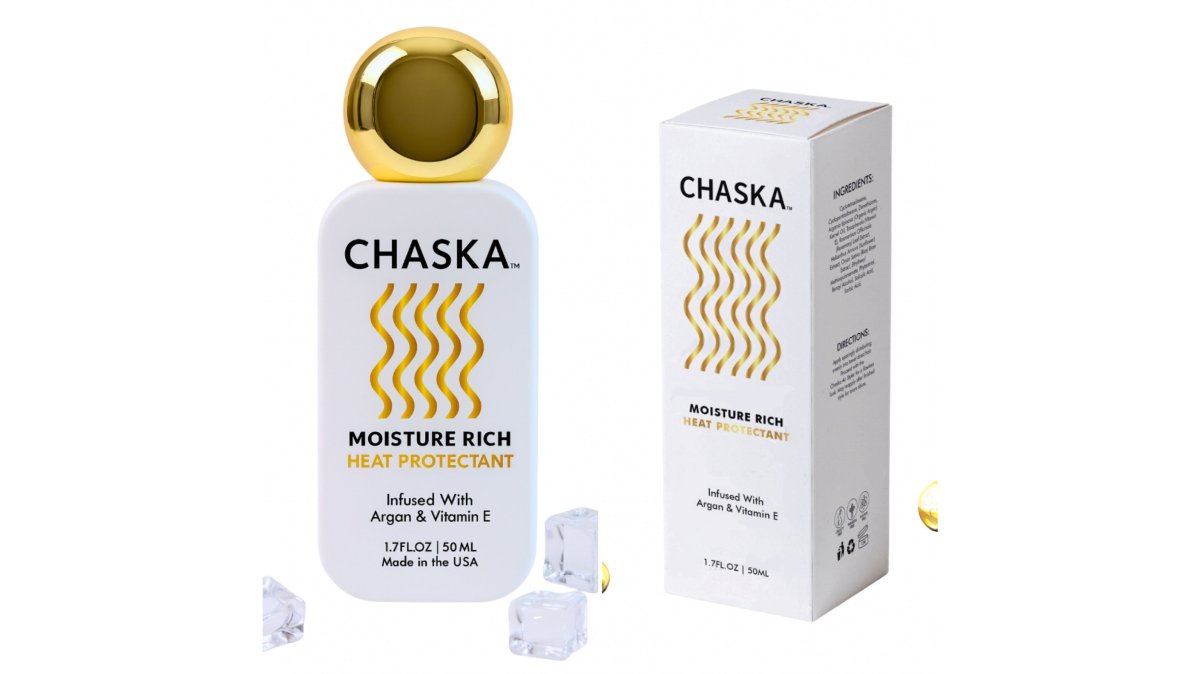
To maintain long-term health, straighten no more than once or twice per week. Give your hair recovery days where you wear it naturally or in protective styles. Use deep conditioning treatments weekly to restore moisture. The CHASKA Moisture Rich Heat Protectant includes argan oil and vitamin E, which is essential for maintaining curl health between straightening sessions.
Straightening coarse curly hair doesn't have to mean choosing between style and health. The right tool, proper technique, and consistent protection let you achieve salon-quality straight hair while preserving your curl structure for the long term. The CHASKA Air Styler delivers that balance with plasma technology and direct airflow that straightens effectively while sealing moisture into your hair. Start with the CHASKA Air Styler and the Moisture Rich Heat Protectant, and you'll get professional results.
Frequently Asked Questions
What temperature should I use to straighten coarse, curly hair?
Coarse, curly hair typically requires 350-400°F for effective straightening. Start at 350°F and increase only if results are insufficient; higher temperatures work faster but increase heat damage risk. Always use a heat protectant before styling. Hair with prior color treatment or damage should stay at the lower end. Test on a small, hidden section first to gauge how your specific hair responds.
Are wide plates better for thick, curly hair?
Yes. Wide plates (1.5 inches or wider) cover more hair per pass, reducing the number of times you run the iron through each section. This means less total heat exposure and faster styling. Wider plates also distribute heat more evenly across dense curls, creating smoother results with fewer passes. For very thick or long hair, 1.75-inch plates are ideal.
What plate material is best for coarse, curly hair?
Ceramic and titanium are both effective. Ceramic plates heat evenly and are gentler on fragile curls; titanium heats faster and holds temperature better under pressure, making it better for very thick, resistant hair. Tourmaline-infused plates add ionic technology to reduce frizz. For coarse hair, titanium or ceramic with tourmaline coating offers the best balance of speed, smoothness, and frizz control.
Can an all-in-one styling tool straighten thick curly hair as well as a dedicated flat iron?
A quality all-in-one tool like the CHASKA Air Styler can deliver comparable results if it has adequate plate width, temperature range, and even heat distribution. The advantage is versatility: you can dry, straighten, and curl with one device, reducing styling time. The trade-off is that no single tool excels at everything, but an all-in-one eliminates tool clutter and simplifies your routine.