


Best Multi-Styler for Frizz-Prone Hair
Table of Contents
- What Makes a Multi-Styler Effective for Frizz-Prone Hair
- Ionic Hair Styling Technology Benefits for Frizz Control
- Best Heat Settings for Frizzy Hair and Temperature Control
- How to Prevent Frizz When Blow Drying with a Multi-Styler
- The CHASKA Air Styler: All-In-One Performance for Frizz-Prone Hair
- Common Misconceptions About Multi-Stylers and Hair Health
- Achieving Salon-Quality Results at Home
- Frequently Asked Questions
Last Updated: September 25, 2026
What Makes a Multi-Styler Effective for Frizz-Prone Hair
Frizz happens when moisture penetrates the hair cuticle, causing strands to swell and lose their smooth alignment. The best multi-styler for frizz-prone hair combines several key technologies to seal moisture out while delivering consistent heat. The best multi-styler for frizz-prone hair works by controlling airflow, maintaining stable temperatures, and using ionic technology to neutralize the electrical charge that causes flyaways.
At The Chaska Life, we understand that frizz-prone hair requires more than just heat, it needs precision. The right tool delivers three critical functions: drying power that removes moisture quickly, straightening plates that seal the cuticle, and curling capability for styling versatility. When these features work together in one device, you eliminate the friction and heat exposure that comes from switching between multiple tools.
The challenge most people face is that traditional multi-stylers sacrifice performance in one area to gain functionality in another. They dry adequately but don't straighten as well. Or they curl beautifully but leave hair frizzy. The solution is finding a tool engineered specifically for frizz control, not just general styling.
Ionic Hair Styling Technology Benefits for Frizz Control
Ionic technology works by releasing negatively charged ions that seal the hair cuticle and reduce static electricity. This is the foundational technology behind frizz reduction. When ions interact with positively charged water molecules in your hair, they neutralize the charge that causes strands to repel each other and stand away from your head.
The practical benefit is immediate: less frizz, more shine, and smoother results. Ionic generators embedded in styling plates or within the airflow stream deliver these ions directly to your hair as you style. Unlike traditional heat-only styling, ionic technology actively protects your hair's moisture barrier rather than just drying it out.
Hair cuticles naturally lie flat when moisture is sealed in and static is eliminated. This is why ionic multi-stylers deliver salon-finish results, the ions do the heavy lifting of frizz prevention while heat provides the styling shape. The combination creates a protective coating that lasts longer than styling alone.
Best Heat Settings for Frizzy Hair and Temperature Control
Heat settings for frizz-prone hair are not one-size-fits-all; they depend on your hair's porosity, which determines how quickly moisture enters and exits the hair shaft. Understanding your porosity is the missing piece most styling guides skip, yet it's the primary reason identical heat settings produce different results for different people.
Low-porosity frizzy hair has a tightly sealed cuticle that resists moisture absorption. Paradoxically, this type is prone to frizz because water sits on the surface rather than penetrating evenly, causing the cuticle to lift unevenly. Low-porosity hair requires lower heat (250°F to 300°F) because it heats quickly and is prone to heat damage. The goal is to use ionic technology and airflow to smooth the cuticle without forcing heat into already-resistant hair. High heat on low-porosity hair often backfires, creating more frizz as the cuticle becomes stressed.
High-porosity frizzy hair has a raised, porous cuticle that absorbs moisture rapidly and loses it just as fast. This type needs moderate to high heat (325°F to 400°F) because the cuticle is already open and needs enough energy to seal properly. High-porosity hair can tolerate heat better than low-porosity hair, but the real solution is locking moisture in with ionic technology immediately after heat application. Without ionic sealing, high-porosity hair rebounds to frizz within hours because moisture escapes as quickly as it was sealed in.
Normal-porosity frizzy hair (the least common among frizz-prone users) responds well to moderate heat settings (300°F to 350°F) with standard ionic technology.
To determine your porosity, perform the float test: place a clean strand of hair in a glass of water. If it sinks immediately, you have high porosity. If it floats or sinks slowly, you have low porosity. This single test should inform your entire heat strategy.
Beyond porosity, temperature consistency matters more than the absolute number on the dial. A multi-styler with intelligent heat control maintains your selected temperature throughout the styling session, preventing the fluctuations that cause damage and frizz rebound. Uneven heat exposure, where the tool heats up, cools down, then heats again, creates stress points in your hair and undoes ionic sealing. Look for multi-stylers with digital temperature displays and ceramic or tourmaline-coated plates; these materials distribute heat evenly and reduce hot spots that cause localized frizz.
The cool shot button, a feature on quality multi-stylers, is non-negotiable for frizz control. Pressing it at the end of each styling pass seals the cuticle with cool air, locking in moisture and ionic treatment. This single step extends frizz resistance by 4-6 hours compared to skipping it. For high-porosity hair especially, the cool shot is what prevents immediate frizz rebound.
CHASKA Air Styler - 3-in-1 Hair Dryer →
Automatic shut-off features indicate the tool has thermal regulation built in. Most quality multi-stylers power down after 30-60 minutes of inactivity, a safety feature that also prevents accidental heat damage if you forget to turn the tool off mid-styling session.
How to Prevent Frizz When Blow Drying with a Multi-Styler
The drying phase sets up your entire styling outcome. Wet hair is vulnerable, cuticles are open, moisture is escaping, and the foundation for frizz is being laid. Most frizz problems originate here, not during straightening or curling. Understanding the mechanics of drying prevents the cascading failures that lead to frizz rebound by midday.
Pre-drying preparation is the overlooked first step. Start with a microfiber towel or cotton t-shirt to remove excess water; rough towel-drying causes cuticle damage that no amount of ionic technology can fully repair. Gently squeeze sections rather than rubbing. Once hair is damp (not soaking), apply a leave-in conditioner or frizz-control serum formulated for your porosity. Low-porosity hair needs lightweight, silicone-based serums that coat the cuticle without weighing it down. High-porosity hair benefits from heavier oils or butters that fill gaps in the cuticle. This step is critical: it gives ionic technology a smoother surface to work with and provides a moisture barrier that reduces frizz during drying.
Airflow direction and speed matter more than heat level during the drying phase. Tools that push air through the barrel or plates rather than around them dry faster and with less frizz. Direct airflow concentrates moisture removal and keeps cuticles aligned. Work section by section, following the direction of your hair cuticles, from roots to ends. Use medium heat (not high) and let the airflow do the work. High heat with high-speed airflow forces moisture out too aggressively, causing the cuticle to lift and trap air pockets that read as frizz. This is the most common drying mistake: people assume faster and hotter equals better results, when the opposite is true for frizz-prone hair.
The 80% dry checkpoint is where most people fail. Once hair reaches 80% dryness, switch immediately to your straightening or curling mode. The final 20% should be dried with heat and ionic technology working together, sealing the cuticle as moisture exits. Continuing aggressive drying past 80% causes the cuticle to over-dry and lift, undoing all your frizz-prevention work. Set a mental timer or watch for the shift from dripping-wet to damp-with-slight-moisture; that's your signal to switch modes.
Troubleshooting common drying failures:
- Frizz appears immediately after drying: You're using heat that's too high or airflow that's too aggressive. Reduce both by one setting and extend drying time by 2-3 minutes. The cuticle needs time to seal gradually, not be shocked into submission.
- Hair feels dry and straw-like after drying: You're over-drying past the 80% checkpoint. Stop drying sooner and rely on the finishing pass with ionic technology to complete the job.
- Frizz returns within 2-3 hours: You're skipping the cool shot button at the end of drying. This step is not optional; it's what locks in moisture and ionic treatment. Always end your drying phase with a 10-15 second cool shot pass.
- Frizz is worse on one side of your head: You're not maintaining consistent airflow direction. Cuticles have a natural direction; fighting it creates frizz. Always dry from roots to ends, never against the grain.
The two-phase drying approach is more effective than trying to dry and style simultaneously. Phase one: aggressive drying with medium heat and direct airflow, working quickly to remove bulk moisture.
The CHASKA Air Styler: All-In-One Performance for Frizz-Prone Hair
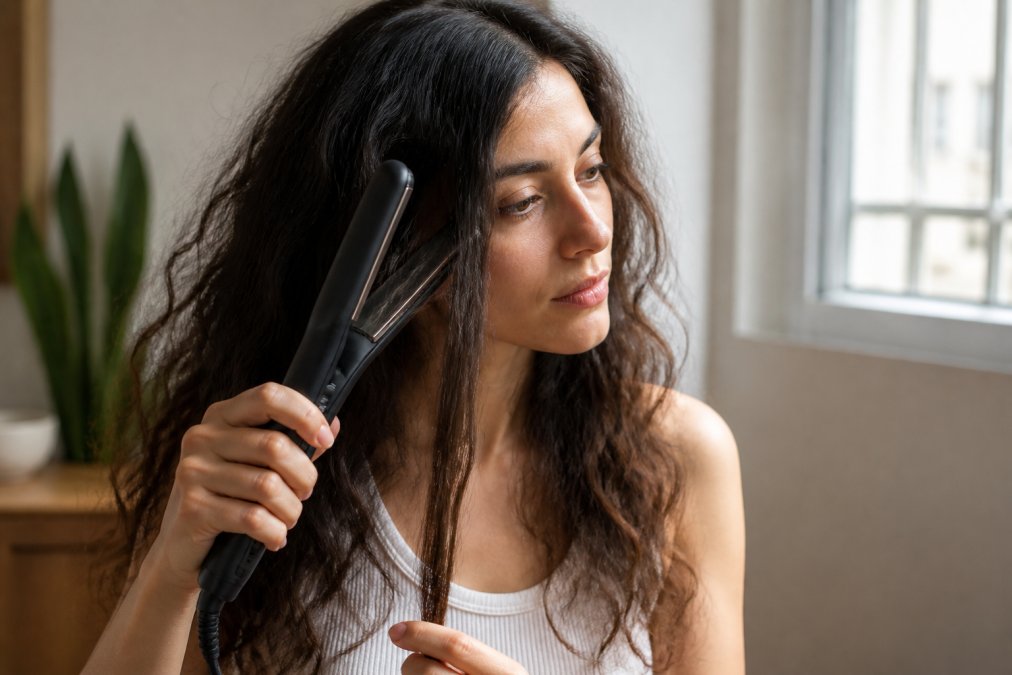
The CHASKA Air Styler is engineered specifically for the challenge of frizz-prone hair. It combines plasma technology with Twin Turbo fans positioned directly in the styling plates, delivering airflow that most multi-stylers cannot match. This direct airflow design cuts drying time while reducing the heat exposure that typically causes frizz.

Common Misconceptions About Multi-Stylers and Hair Health
A widespread belief is that using one tool instead of three exposes your hair to more concentrated heat. Using three separate tools means three separate heating cycles: drying with a blow dryer, straightening with a flat iron, then potentially curling or touch-up straightening. Each cycle opens the cuticle and stresses the hair.
Achieving Salon-Quality Results at Home
Salon-quality results depend on three factors: the right tool, proper technique, and consistency. A multi-styler engineered for frizz control handles the first requirement. Technique is learnable, most people master the basics within three to five styling sessions.
Frequently Asked Questions
What is the best multi-styler for frizz-prone hair?
The best multi-styler for frizz-prone hair combines ionic technology, intelligent heat control, and airflow distribution. The CHASKA Air Styler delivers these features with its Advanced Plasma Ion System, which generates negatively charged ions to seal the hair cuticle and eliminate frizz at the molecular level. Its Twin Turbo fans provide direct airflow for faster drying and reduced heat exposure, critical for preventing frizz in moisture-prone hair.
How does ionic hair styling technology benefit frizz reduction?
Ionic technology works by releasing negatively charged ions that close the hair cuticle, sealing in moisture and reducing the static electricity that causes flyaways. This creates a smoother surface that reflects light, enhancing shine. For frizz-prone hair, this molecular-level moisture retention is what separates effective tools from basic ones, making ionic generators essential for long-lasting frizz control.
What heat settings should I use for frizzy hair?
Start with a moderate heat setting for frizz-prone hair to minimize heat damage while maintaining styling power. Use the cool shot button at the end of each section to seal the cuticle and lock in moisture. Adjust upward only if your hair doesn't respond.
Can a multi-styler actually replace separate tools for frizz control?
Yes, when designed correctly. A multi-styler with ionic technology, thermal protection, and intelligent heat distribution can simplify your routine and reduce tool clutter. One well-engineered tool with direct airflow and plasma technology provides a seamless solution. The CHASKA Air Styler's patented heat plate and Twin Turbo fans deliver this integrated approach, eliminating the need for separate dryers, straighteners, and curlers.