


How to Prevent Hair Frizz Overnight With a Simple Routine
Last Updated: October 31, 2026
Quick Summary
To prevent hair frizz overnight, moisturize your hair based on whether it is wet, damp, or dry, then gather it into a loose protective style like a pineapple or braid secured with a satin scrunchie. Sleep on a silk or satin pillowcase or in a bonnet to reduce friction, and refresh gently in the morning without brushing dry curls.
- Overnight frizz comes from friction, moisture loss, and humidity swelling dry strands unevenly.
- The pineapple method piles curls loosely at the crown so they stay undisturbed while you sleep.
- Wash silk and satin pillowcases every 3 to 4 days to prevent product and oil buildup.
- Never sleep on soaking wet hair in a tight style, since wet hair stretches and can break.
- Match your sleep tool to your length: a satin pillowcase suits short hair, a bonnet suits long hair.
Table of Contents
- Why Hair Turns Frizzy Overnight
- How to Protect Curly Hair While Sleeping
- The Pineapple Method for Curly Hair and Other Protective Styles
- Choosing a Silk or Satin Pillowcase for Frizzy Hair
- Step-by-Step Nighttime Routine for Wet, Damp, and Dry Hair
- How to Refresh Frizzy Hair in the Morning
- Set Up Your Nightly Frizz Prevention Routine
- Frequently Asked Questions
Why Hair Turns Frizzy Overnight
You go to bed with smooth hair. You wake up looking like you touched a static balloon.
Overnight frizz is the result of three forces working against your hair while you sleep. First, cotton pillowcases create friction as you move, roughing up the cuticle. Second, your hair loses moisture into the air and the fabric. Third, natural humidity seeps into dry strands and swells them unevenly. The cuticle lifts, and frizz appears.
Here's what most guides miss. Frizz is a moisture imbalance problem, not a styling problem. Dry hair grabs moisture from the air.
A common mistake is blaming your hair type.
If humidity is your main enemy, our guide on how to prevent hair frizz in humid weather covers the daytime side of the same problem.
How to Protect Curly Hair While Sleeping
Protecting curls overnight comes down to one goal: keep the curl pattern intact and the cuticle smooth.
Start with these steps:
- Detangle gently before bed with a wide-tooth comb, never a brush on dry curls
- Add moisture with a small amount of leave-in conditioner
- Choose a low-friction surface like satin or silk
Wavy hair follows the same rules with less product. Fine hair needs the lightest touch, since heavy products weigh curls down.
The real difference between a good and bad curl morning comes down to how much you disturb the hair while sleeping. Less movement means less frizz.
The Pineapple Method for Curly Hair and Other Protective Styles
The pineapple method is a way to protect curly hair overnight by gathering it loosely at the top of the head, so curls stay piled and undisturbed.
Here's how to do it:
- Flip your head forward so hair falls toward the floor
- Gather all hair at the crown, not the back of the head
- Secure it with a satin scrunchie, loosely
- Keep the tension gentle so no creases form
- Sleep with the hair piled above the pillow
Match the style to your hair type and length
The style that works depends on your pattern, your length, and how you sleep. Use this as a starting point.
| Hair type | Best overnight style | Why | Watch out for |
|---|---|---|---|
| Straight, fine | Loose high ponytail or a single loose braid | Keeps hair off the pillow without heavy product | Tight elastics leave dents; use a satin scrunchie |
| Straight, thick | Loose braid or a low bun | Contains volume and reduces tangling at the nape | Buns can pull the hairline; keep them low and loose |
| Wavy | Loose pineapple or a single loose braid | Preserves the wave pattern with minimal disturbance | A tight pineapple flattens the root |
| Curly | Pineapple at the crown | Piles curls so they stay untouched | Gathering too low crushes the back curls |
| Coily | Pineapple plus a bonnet, or two loose twists | Contains shrinkage and protects ends | Twists that are too tight stress the hairline |
| High-porosity | Loose braid or bun with a leave-in | Seals the cuticle and limits moisture loss | Heavy product weighs hair down by morning |
Other protective styles and when to use them
- Loose braid: good for long hair, keeps strands from tangling. Best for straight, wavy, and high-porosity hair that tangles at the ends.
- Loose bun: simple and quick, best for medium lengths. Keep it low so it doesn't pull the hairline.
- High ponytail: works for straight and wavy hair, use a satin scrunchie. Not ideal for curly hair, which loses its pattern when pulled up tight.
A common mistake is tying too tight. Tight styles leave dents and stress the hair. Keep everything loose enough that you can slide a finger under the scrunchie.
If you want more heat-free options, see our list of heatless hairstyles for fine hair that reduce overnight friction.
Choosing a Silk or Satin Pillowcase for Frizzy Hair
A silk or satin pillowcase for frizzy hair works because both materials let hair glide instead of catch. Cotton grips the cuticle. Silk and satin let strands slide, so there's less friction. But the pillowcase is only one of three sleep surfaces you can choose, and the right pick depends on how you sleep and how long your hair is.
Pillowcase, bonnet, or scarf: which one?
Three sleep tools solve different problems. Here is how they compare on the things that actually decide whether you stick with them.
| Tool | What it protects | Best for | Comfort trade-off | Maintenance |
|---|---|---|---|---|
| Silk or satin pillowcase | Hair that rests on the pillow; face and skin | Side sleepers, short to medium hair, people who dislike head coverings | None once you're used to the cool feel | Wash every 3-4 days; silk needs hand wash or a delicate cycle |
| Bonnet | All hair, all night, even when you move | Long hair, curly and coily patterns, active sleepers, protective styles | Can feel warm; may slip off fine or short hair | Wash weekly; check the elastic for stretch |
| Scarf or wrap | Hairline and length, with adjustable tension | Short to medium hair, loose styles, people who find bonnets bulky | Needs tying; can loosen overnight | Wash weekly; re-tie as needed |
A common pattern is to start with a pillowcase, then add a bonnet or scarf if you still wake up with frizz on the side you sleep on. The pillowcase protects whatever slips out of a bonnet or scarf, so the two work together rather than as alternatives.
How to choose by hair length and sleep habit
- Short hair (above the shoulder): a satin pillowcase is usually enough. A bonnet tends to slide off short hair; a scarf works if you want extra hold at the hairline.
- Medium hair (shoulder to mid-back): pillowcase plus a loose scarf or a low bonnet. This length tangles at the nape, so cover the ends.
- Long hair (past mid-back): a bonnet or a large scarf that contains the full length. A pillowcase alone leaves the ends exposed to the sheet.
Silk versus satin: the real trade-offs
| Material | Feel | Best for | Care |
|---|---|---|---|
| Mulberry silk | Smooth, cool | Sensitive hair, anti-crease, hot sleepers | Hand wash or delicate cycle, gentle detergent, air dry |
| Satin (polyester) | Sleek, affordable | Budget buyers, easy care, travel | Machine wash cold, tumble low |
| Cotton | Breathable, grippy | Not ideal for frizz | Easy, but adds friction |
Silk costs more and needs gentler washing. Satin is cheaper and easier to clean but less breathable. If you are unsure, buy one satin pillowcase first, test it for a week, and add a bonnet only if morning frizz persists.
CHASKA Moisture Rich Heat Protectant →
If you want more heat-free options, see our list of heatless hairstyles for fine hair that reduce overnight friction.
Step-by-Step Nighttime Routine for Wet, Damp, and Dry Hair
Your nighttime routine should match your hair's moisture level. Wet, damp, and dry hair each need a different approach.
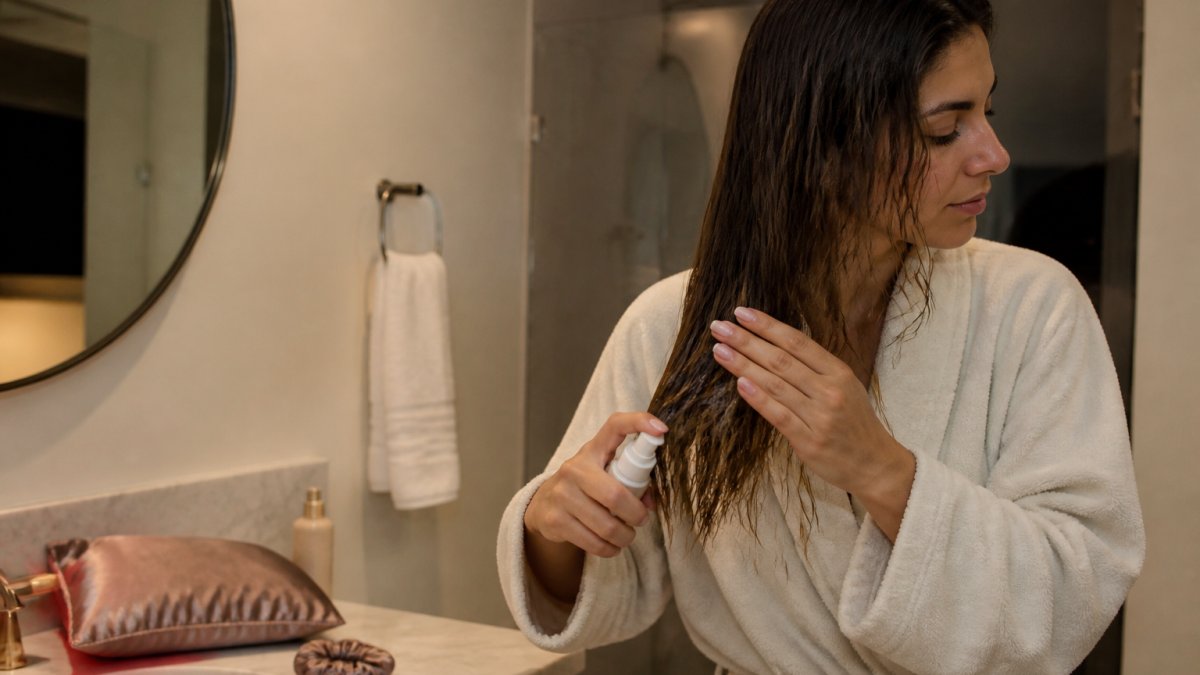
If your hair is wet:
- Squeeze out excess water with a microfiber towel
- Apply leave-in conditioner to the ends
- Detangle with a wide-tooth comb
- Never sleep on soaking wet hair, since it weakens strands and causes breakage
- Let it air-dry partway, then pile it loosely
If your hair is damp:
- Add a small amount of leave-in treatment
- Comb through from ends upward
- Gather into a loose bun or braid
- Use a satin scrunchie
If your hair is dry:
- Apply a few drops of argan oil or a light leave-in to the ends
- Smooth from ends upward, avoiding the roots
- Detangle gently
- Pile into a pineapple or loose braid
For dry or damp hair, a moisture-rich protectant helps seal the cuticle before bed. Our CHASKA Moisture Rich Heat Protectant is a moisture-rich protectant that smooths strands.

Watch out: too much product causes buildup, which makes hair look greasy and limp by morning. Start small and add more only if needed.
How to Refresh Frizzy Hair in the Morning
Morning frizz is fixable without a full wash. The goal is to smooth the cuticle and reactivate your curl pattern with minimal disturbance.
Try this quick routine:
- Don't brush dry curls. Mist with water or a refresh spray instead.
- Scrunch gently to reactivate curls.
- Add a drop of leave-in to smooth frizz at the ends.
For curls that flattened overnight, a no-wash method works best. Our guide on how to refresh second day air curls without washing walks through the full process step by step.
If you style with heat, prevent frizz before it starts. Our seven-step guide on preventing frizz when heat styling curls covers heat protection and technique.
Set Up Your Nightly Frizz Prevention Routine
Consistency beats intensity. A simple routine you repeat every night works better than an elaborate one you skip.
Build your habit around four anchors:
- Moisturize based on whether hair is wet, damp, or dry
- Protect with a loose style and satin scrunchie
- Reduce friction with a silk or satin pillowcase or bonnet
Check your sleep accessories weekly. Wash silk and satin pillowcases every few days to prevent product buildup and oils from transferring back to your hair.
The real test is your morning. If you still wake up frizzy, adjust one variable at a time: more moisture, a looser style, or a smoother surface.
Frequently Asked Questions
Should I sleep with my hair up or down to prevent frizz?
Sleeping with hair up in a loose style usually beats leaving it down, because it keeps strands from rubbing against the pillowcase and tangling. Use a loose braid, a low bun, or the pineapple method with a satin scrunchie. Skip tight ponytails and elastics, which pull on the hair and leave creases. If your hair is short or very straight, a silk or satin pillowcase alone may be enough to prevent hair frizz without tying it up at all.
Does a silk or satin pillowcase actually help prevent hair frizz?
Yes, for a simple reason: cotton has a rougher weave that grips hair strands and creates friction as you move in your sleep, which roughens the cuticle and lets moisture escape. Silk and satin have a smoother surface, so hair glides instead of catching. A satin pillowcase is typically the cheaper option. Pair it with a bonnet or scarf on humid nights, and wash the pillowcase weekly to keep product buildup from transferring back onto your hair.
What is the pineapple method for curly hair?
The pineapple method means gathering your hair at the very top of your head into a loose, high ponytail secured with a satin scrunchie, so the curls sit above the pillow instead of being flattened. It preserves curl pattern and volume while you sleep. Keep the tie loose enough that it does not pull at your scalp, and only use it on dry or damp hair, never soaking wet. In the morning, take it down and shake gently rather than combing through the curls.
How do I refresh frizzy hair in the morning without washing it?
Mist the frizzy sections lightly with water or a leave-in conditioner diluted with water, then scrunch or smooth with your hands. For straight hair, a few drops of a heat protectant worked from the ends upward smooths the lengths before a quick pass with a styler. For curls, cup the hair upward and let it air dry. Avoid brushing dry hair, which breaks up the curl pattern and creates more frizz. A satin scrunchie and five minutes is often all you need.
Frizzy mornings don't have to be your default. At The Chaska Life, we built the All-In-1 Air Styler to dry, straighten, and curl in one pass, so you spend less time fighting frizz and more time getting ready. Pair it with our moisture-rich protectant for smoother results from wash day to refresh day. Get started with The Chaska Life and simplify your styling routine.
