


How to Protect Color-Treated Hair From Heat Styling Damage
Table of Contents
- Why Color-Treated Hair Is More Vulnerable to Heat Styling Damage
- Signs of Heat Damaged Hair You Should Never Ignore
- What to Look for in the Best Heat Protectant for Color-Treated Hair
- Low Heat Styling Techniques That Preserve Color and Texture
- Tool-Specific Heat Management: Matching Your Styler to Your Hair Type
- Post-Styling Maintenance and Environmental Protection for Lasting Color
- Common Mistakes That Accelerate Heat Damage on Color-Treated Hair
- Conclusion: Building a Heat-Safe Styling Routine That Keeps Color Vibrant
- Frequently Asked Questions
Last Updated: October 2, 2026
Why Color-Treated Hair Is More Vulnerable to Heat Styling Damage
Color-treated hair loses moisture faster and breaks more easily under heat than untreated hair, which is why the same flat iron temperature that leaves virgin hair glossy can leave dyed hair dry, dull, and faded within weeks.
This guide from The Chaska Life breaks down how to protect color treated hair from heat styling damage, step by step: the warning signs, the ingredients that shield color, low-heat techniques, and the mistakes that wreck a fresh dye job.
How Chemical Processing Weakens the Hair Cuticle
The hair cuticle is the outer protective layer of each strand, made of overlapping scales that lock in moisture and color. Dye and bleach lift those scales to deposit pigment, leaving the cuticle more porous and less able to hold onto moisture and color molecules.
More porous hair loses hydration fast and grabs heat faster, speeding up fading and breakage.
The Link Between Heat Exposure, Color Fading, and Hair Breakage
Heat styling pulls moisture from the strand and stresses its structural bonds. On color-treated hair, pigment escapes through a raised cuticle and the strand weakens until it snaps.
Heat damage isn't sudden, it builds gradually, one pass of a hot tool at a time.
Signs of Heat Damaged Hair You Should Never Ignore
Signs of heat damaged hair include dryness conditioner can't fix, rough texture, split ends, and color that fades faster than expected. Catching these early lets you adjust before the damage becomes permanent.

Watch for these signals:
- Hair feels brittle or straw-like right after styling
- Color looks dull or brassy within days of a touch-up
- More shedding than usual when you brush or wash
- Ends split faster than you can trim them
- Hair loses its natural bounce and elasticity
If several of these sound familiar, your styling routine is likely too hot or too frequent.
What to Look for in the Best Heat Protectant for Color-Treated Hair
The best heat protectant for color-treated hair shields the strand from heat and helps seal the cuticle so color stays put. The right pick depends on how porous your hair has become after dyeing or bleaching.
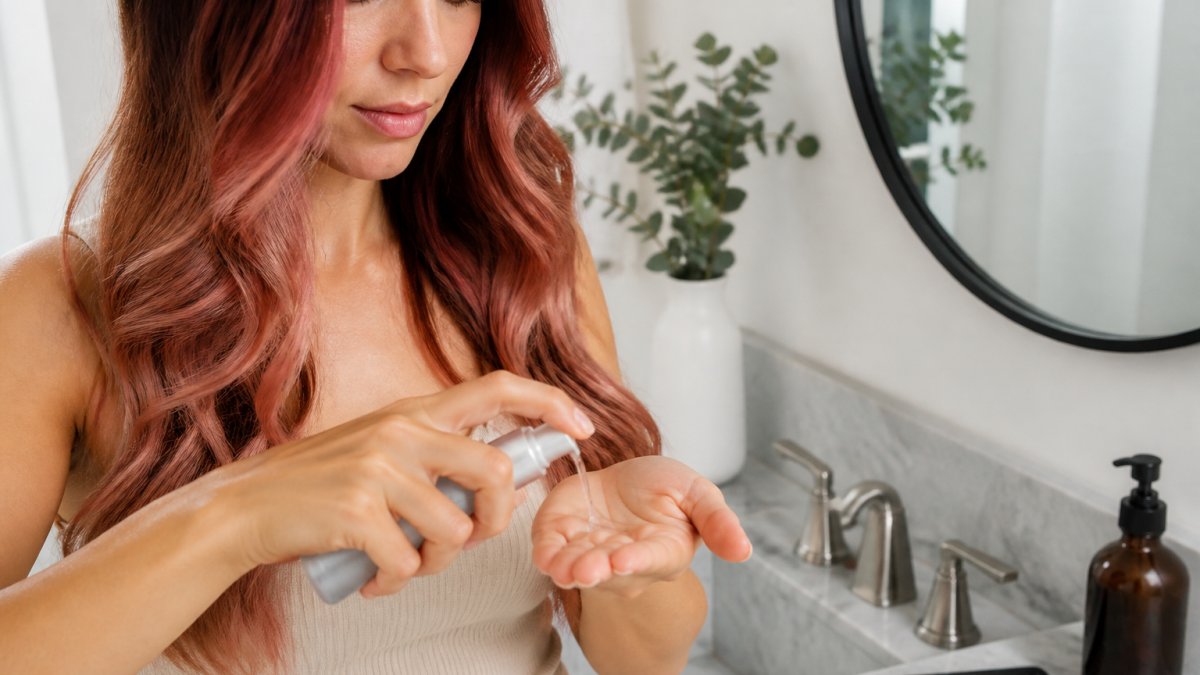
A good option is the CHASKA Moisture Rich Heat Protectant, which uses organic argan oil, vitamin E, and lightweight silicones to smooth strands and reduce moisture loss. It pairs with the CHASKA Air Styler but works as a pre-styling primer with any tool.

How Heat Protectants Actually Work: Three Mechanisms
Heat protectants don't "block" heat like a glove blocks a hot pan. They work through one or more mechanisms:
- Film-forming (silicones): Dimethicone, cyclopentasiloxane, and amodimethicone spread into a thin, flexible film over the cuticle. That film slows water evaporation and reduces friction between the strand and the hot plate. Amodimethicone is especially useful on color-treated hair because it selectively binds to damaged, negatively charged areas of the cuticle, exactly where dye loss happens.
- Moisture-binding (humectants and oils): Glycerin, panthenol, and argan oil pull water into the cortex and slow heat-driven moisture loss. They don't form a film, so pair them with a silicone or protein.
- Sacrificial proteins and amino acids: Hydrolyzed wheat, silk, or rice protein fills gaps in a raised cuticle and degrades under heat before the strand's own keratin does, a sacrificial layer. That's why protein-based protectants are common for bleached hair.
A protectant that only does one of these is a partial solution. The strongest formulas combine a film-former, a humectant, and a protein.
Matching the Formula to Your Hair's Porosity
Porosity, how easily hair absorbs and releases moisture, should drive which mechanism you prioritize:
- Low porosity (resistant, often virgin or lightly glossed): The cuticle is tight, so heavy silicones and oils cause buildup. Look for lightweight cyclopentasiloxane and water-based formulas with glycerin.
- Medium porosity (healthy color-treated): A balanced formula with dimethicone, argan oil, and panthenol works well and won't weigh hair down.
- High porosity (bleached, over-processed, or heat-damaged): The cuticle is wide open and loses moisture fast. Prioritize amodimethicone, hydrolyzed protein, and heavier emollients like shea or argan. These strands need both a film and a filler.
A quick at-home test: drop a clean strand of shed hair into a glass of water. If it sinks quickly, porosity is high. If it floats for several minutes, porosity is low.
Key Ingredients That Shield Color and Seal the Cuticle
Ingredient science matters more than marketing claims. Check the label for these categories:
- Silicones like dimethicone, amodimethicone, and cyclopentasiloxane: wrap each strand in a light protective layer that slows moisture loss; amodimethicone also targets damaged zones
- Argan oil: adds moisture and smooths frizz without a greasy finish
- Vitamin E (tocopherols): an antioxidant that helps defend against free-radical damage
- Panthenol and hydrolyzed proteins: support strength, fill cuticle gaps, and help hair feel less brittle over time
- Glycerin: a humectant that holds water in the cortex and slows heat-driven moisture loss
Skip products loaded with heavy waxes like beeswax or candelilla at high concentrations, they coat the strand without aiding moisture retention and can block later conditioning treatments.
What to Avoid on the Label
- High alcohol content (alcohol denat. near the top of the list): speeds drying but strips moisture from already-porous color-treated hair
- Heavy waxes as the primary ingredient: coat without conditioning
- Formulas with no film-former and no protein: they may smell nice but offer little thermal protection
- Sunscreen-only sprays marketed as heat protectants: UV filters and heat protection are different jobs; a product needs both to do both
Low Heat Styling Techniques That Preserve Color and Texture
Low heat styling techniques keep tool temperature and passes to a minimum, a combination that protects color and texture better than any single product can alone.
Start with these habits:
- Towel-dry gently, then let hair air-dry partway before styling
- Always apply heat protectant to damp or dry hair before the tool touches it
- Keep tools on the lowest setting that still gets the job done
- Move the tool continuously instead of holding it in one spot
Step-by-Step: How to Style With Minimal Heat Exposure
Follow this routine to cut heat exposure without losing your look:
- Wash with a sulfate-free shampoo to preserve color and natural oils.
- Apply a leave-in conditioner or heat protectant from mid-length to ends.
- Let hair air-dry until it's about 70 percent dry.
- Set your blow dryer or styler to the lowest effective heat setting.
- Work in small sections, one pass per section.
- Finish with a cool shot to seal the cuticle.
- Skip a second pass unless the section is still damp or uneven.
That last step is the one most people skip. One clean pass beats three rushed ones every time.
Tool-Specific Heat Management: Matching Your Styler to Your Hair Type
Tool-specific heat management means matching temperature and tool to your hair's thickness, texture, and porosity. Fine or damaged hair needs far less heat than thick, coarse hair.
Here's a quick reference:
| Hair Type | Suggested Heat Level | Passes Per Section |
|---|---|---|
| Fine or thin | Low | 1 |
| Medium, healthy | Medium | 1-2 |
| Thick or coarse | Medium-high | 2 |
| Color-treated, damaged | Low | 1 |
A multi-function tool helps here. The CHASKA Air Styler combines drying, straightening, and curling in one device, so you're not switching between a blow dryer and a flat iron and adding extra heat passes. Fewer tools means fewer chances to overheat the same section.
Post-Styling Maintenance and Environmental Protection for Lasting Color
Post-styling care and environmental protection extend how long your color lasts between salon visits. Most guides stop at "use a UV spray and rinse with cool water." The bigger opportunity is second-day hair care and the environmental stressors, chlorine, saltwater, hard water, that amplify heat damage and color fading together.
Second-Day Hair Care: The Step Most People Skip
Heat damage doesn't end when you put the tool down. The 24-48 hours after styling are when a raised cuticle is most vulnerable to friction, moisture loss, and color leaching. Treat second-day hair as recovery time:
- Don't re-style on day two unless you have to. If you must, use dry shampoo at the roots and a light mist of leave-in on the lengths instead of a full re-pass with a hot tool.
- Refresh with water, not heat. A spray bottle of filtered water plus a few drops of leave-in conditioner reactivates the cuticle and smooths frizz without a single degree of heat.
- Loosen the style before bed. Tight ponytails and buns create tension and friction along the same strands you just heat-styled. A loose braid or a silk scrunchie reduces mechanical damage.
- Rotate your part and your style. Styling the same section the same way every day concentrates heat and friction in one zone, which is where breakage shows up first.
- Sleep on silk or satin. Cotton pillowcases grab the cuticle and pull moisture out overnight. Silk and satin let hair slide, which preserves both color and texture.
Chlorine, Saltwater, and Hard Water: The Environmental Multipliers
Heat styling raises the cuticle, and once it's raised, environmental stressors penetrate deeper and do more damage than on virgin hair, a synergy most articles ignore:
- Chlorine (pools): Oxidizes color molecules and strips the cuticle. Before swimming, wet hair with fresh water and apply a leave-in conditioner or a thin layer of silicone-based protectant, saturated hair absorbs less chlorine. Rinse immediately after with a chelating or swimmer's shampoo.
- Saltwater (ocean): Draws moisture out of the strand osmotically and leaves salt crystals that abrade the cuticle when you brush. Rinse with fresh water before and after, and follow with a deep conditioner.
- Hard water (minerals): Calcium and magnesium deposit on the cuticle, dulling color and making hair feel rough. A clarifying treatment once every two to three weeks, or a shower filter, reduces buildup that traps color and blocks conditioning.
- UV and pollution: UV breaks down both the dye molecule and the protein structure of the strand. Pollution particles settle on the cuticle and oxidize. A UV-filter leave-in and a weekly deep condition address both.
A Simple Post-Styling and Environmental Routine
- Same day as styling: cool shot to seal the cuticle, then a light UV-filter leave-in if you're going outside
- Night: loose braid or silk scrunchie, silk or satin pillowcase
- Day two: dry shampoo at roots, water-and-leave-in refresh on lengths, no hot tools if possible
- Wash days: sulfate-free shampoo, cool-water rinse, deep condition once a week
- Pool or ocean days: pre-rinse with fresh water, apply leave-in or protectant, rinse immediately after, chelate or clarify within 24 hours
- Every two to three weeks: clarifying or chelating treatment if you swim, live in a hard-water area, or use a lot of styling product
Common Mistakes That Accelerate Heat Damage on Color-Treated Hair
The biggest mistake is styling soaking wet hair with a hot tool, water boils inside the strand and steam damages the cuticle from the inside out.
Other mistakes to avoid:
- Cranking the temperature to the highest setting "to save time"
- Skipping heat protectant because hair "feels fine"
- Re-styling the same section repeatedly in one sitting
- Using a flat iron on hair that hasn't been dried first
- Washing with harsh sulfates that strip color faster
Fixing even two of these can noticeably slow down fading and breakage.
Conclusion: Building a Heat-Safe Styling Routine That Keeps Color Vibrant
Keeping color vibrant comes down to consistency: protect before styling, keep heat low, and care for hair between washes. Skip one step and you'll notice within weeks.
The Chaska Life makes that routine simpler with the CHASKA Air Styler, a 3-in-1 tool that dries, straightens, and curls in one pass, plus the Moisture Rich Heat Protectant to shield strands before heat touches them. Together, they cut down on tools, passes, and the damage that comes with both.
Get started with The Chaska Life and build a styling routine that keeps your color looking fresh for longer.
Frequently Asked Questions
What is the best heat protectant for color-treated hair?
The best heat protectant for color-treated hair contains a mix of lightweight silicones like dimethicone to seal the cuticle, plus antioxidants like vitamin E and natural oils such as argan oil for moisture retention. Look for formulas that also include UV filters like ethylhexyl methoxycinnamate, which help prevent color fading from sun exposure. The CHASKA Moisture Rich Heat Protectant ($24) combines cyclotetrasiloxane, dimethicone, organic argan kernel oil, and vitamin E to shield strands while adding shine. Apply 2-3 drops for shorter hair or up to a coin-sized amount for longer lengths, working from ends upward.
Does heat styling cause hair color to fade faster?
Yes. Heat styling opens the hair cuticle, which allows color molecules deposited during chemical processing to escape more easily. Repeated exposure to high temperatures accelerates this process, especially on porous, color-treated strands. Using a heat protectant spray, keeping tools on the lowest effective setting, and limiting styling sessions significantly slow color fading. UV exposure compounds the problem, so choose protectants with UV filters and consider a leave-in conditioner for added moisture retention between washes.
How often should I use heat on color-treated hair?
To give color-treated hair time to recover, consider limiting heat styling sessions. Between sessions, use low heat styling techniques like air drying or cool-shot finishing to minimize thermal stress. On days you do use heat, always apply a heat protectant spray first, keep your blow dryer or flat iron on the lowest effective setting, and finish with a cool rinse or cool shot to seal the cuticle. If your hair shows signs of heat damaged hair such as split ends or brittleness, consider taking a break from heat entirely.
What are the early signs of heat damaged hair?
Early signs of heat damaged hair include split ends appearing shortly after a trim, rough or brittle texture that won't hold moisture, color that fades faster than expected, and hair that snaps easily when wet. You may also notice a lack of elasticity, meaning strands don't stretch and bounce back. If you spot these signs, reduce heat tool temperatures, add a deep conditioning or protein treatment to your routine, and switch to a sulfate-free shampoo to preserve moisture retention.