


Least Damaging Hair Styling Tool for Fine Hair
Table of Contents
- Understanding Fine Hair and Heat Vulnerability
- How to Avoid Heat Styling Damage: Core Principles
- Air Styling vs Traditional Heat Tools: What the Science Shows
- Best Heat Protectant for Fine Hair and Pre-Styling Routine
- Choosing the Right Least Damaging Hair Styling Tool
- Heatless Styling Alternatives and Protective Methods
- Long-Term Hair Health Tracking and Damage Prevention
- Frequently Asked Questions
Last Updated: September 29, 2026
Understanding Fine Hair and Heat Vulnerability
Fine hair presents a unique challenge when it comes to heat styling. Unlike thicker hair types that can withstand higher temperatures and mechanical stress, fine strands have a smaller diameter and lower density, making them inherently more fragile. The hair cuticle, the outermost protective layer, is thinner on fine hair, which means heat penetrates more quickly and causes damage faster than it would on coarser textures.
When you apply heat to fine hair, you're not just styling; you're potentially compromising the hair shaft's structural integrity. Fine hair loses moisture more easily because there's less surface area to retain it. This moisture loss directly translates to breakage, split ends, and that limp, damaged appearance that many people with fine hair dread. The challenge intensifies when you're using multiple styling tools, as each application adds cumulative thermal damage. Mitigating this cycle of degradation requires a consistent approach to restoring the cuticle, which is why fixing heat damaged hair remains a fundamental priority for maintaining long-term strand health.
Understanding what is the least damaging hair styling tool for fine hair starts with grasping how heat interacts with your specific hair type. It's not about avoiding heat entirely, many people need heat styling for their routines, it's about choosing tools and techniques that minimize the damage while delivering the results you want.
How to Avoid Heat Styling Damage: Core Principles
The foundation of damage prevention rests on three non-negotiable principles: temperature control, protective barriers, and technique. These work together to preserve your hair's health while still allowing you to style.
Temperature is the primary culprit. Fine hair begins to show signs of thermal damage at lower temperatures than thick hair. Most professionals recommend keeping heat settings below 350°F for fine hair, though even lower (around 300°F) is safer for frequent styling. The key is finding the minimum temperature that achieves your desired result, then stopping there. Many people use higher heat than necessary simply out of habit.
A heat protectant isn't optional, it's essential infrastructure for fine hair. Products like the CHASKA Moisture Rich Heat Protectant create a barrier between your hair and direct heat exposure. These products work by coating the hair shaft and reducing moisture loss during styling. Apply protectant to damp hair, working from mid-length to ends, before any heat tool touches your strands.

Technique matters as much as the tool itself. Rushing through styling with high heat and aggressive tension causes immediate and lasting damage. Slower passes with lower heat, combined with proper airflow distribution, achieve better results with less damage. The difference between damaging your hair and protecting it often comes down to patience.
Air Styling vs Traditional Heat Tools: What the Science Shows
Air styling represents a fundamentally different approach to heat application. Rather than concentrating heat in a small area with direct contact, air styling distributes heat through moving air, reducing the intensity of thermal exposure on any single section of hair.
Traditional heat tools, flat irons and curling irons, apply concentrated heat directly to the hair shaft through metal or ceramic plates. This direct contact method heats the hair cuticle rapidly, which is effective for styling but carries higher risk of damage, especially on fine hair. The longer the contact time, the greater the potential for thermal damage to accumulate.
Air styling tools use airflow to dry and style simultaneously. This method allows for faster drying without the sustained heat exposure of traditional tools. For fine hair specifically, the reduced contact time translates to measurably less cuticle damage and moisture loss.
Ceramic vs. Metal Heating Elements
The material of the heating element affects how heat transfers to your hair. Ceramic distributes heat more evenly than metal, reducing hot spots that can cause localized damage. Metal heats quickly but can create temperature inconsistencies across the plate surface.
For fine hair, ceramic is the safer choice. It provides more uniform heat distribution, which means your hair experiences consistent temperatures rather than fluctuating between hot spots and cooler areas. This consistency reduces the likelihood of unexpected damage from concentrated heat.
The CHASKA Air Styler uses advanced heating technology engineered specifically to minimize damage while delivering styling power.

Ionic Technology and Negative Ions
Ionic technology generates negative ions that interact with the hair cuticle at a molecular level. These negatively charged ions seal the cuticle, reducing frizz and moisture loss. For fine hair, this cuticle sealing is particularly valuable because it helps retain the moisture that fine strands are prone to losing.
The mechanism is straightforward: negative ions neutralize positive charges on the hair surface, allowing the cuticle to lie flat. When the cuticle lies flat, moisture stays locked inside the hair shaft rather than escaping. This is why ionic tools often produce shinier, smoother results with less frizz, and why they're gentler on fine hair overall.
CHASKA Air Styler - 3-in-1 Hair Dryer →
Tools featuring ionic technology like the CHASKA Air Styler's plasma technology system generate millions of negative ions during styling, actively protecting your hair's moisture content while you style. This represents a meaningful shift from tools that simply apply heat without any protective mechanism.
Best Heat Protectant for Fine Hair and Pre-Styling Routine
A proper pre-styling routine sets the foundation for damage prevention. Start with clean, damp hair, not soaking wet, but with enough moisture that the hair is pliable. Damp hair is more receptive to heat protectant products and requires less total heat exposure to dry and style.
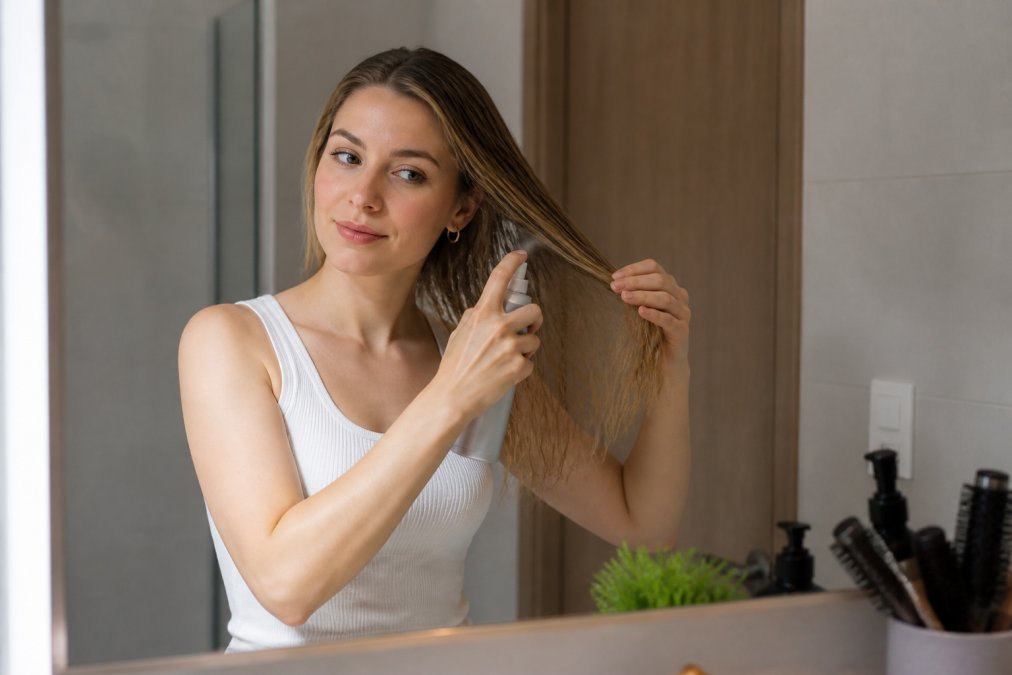
Apply heat protectant while hair is still damp, focusing on mid-length to ends where damage is most visible. Avoid applying protectant directly to the roots, as this can weigh down fine hair. The CHASKA Moisture Rich Heat Protectant contains argan oil and vitamin E, which nourish fine strands while creating a protective barrier. Use 2-3 drops for shorter lengths, distributing evenly with a wide-tooth comb.
Let the protectant set for 30 seconds before applying heat. This brief pause allows the product to bond with your hair and establish its protective layer. Combing through after application ensures even distribution, which is critical for consistent protection across all your strands.
The pre-styling routine also includes detangling. Fine hair tangles easily and breaks under tension.
Choosing the Right Least Damaging Hair Styling Tool
Selecting what is the least damaging hair styling tool for fine hair requires evaluating several specific factors. No single tool is universally best, the right choice depends on your styling needs, hair length, and daily routine demands.
Temperature Control and Heat Settings
The ability to adjust temperature is non-negotiable for fine hair. Look for tools offering at least 5-10 temperature settings, with a minimum setting around 250°F and a maximum around 350°F. Fine hair rarely needs the highest heat settings that thicker hair might require.
Airflow Distribution and Styling Precision
How a tool distributes airflow directly impacts damage. Concentrated airflow in a narrow stream can create tension and cause breakage. Distributed airflow across a wider area is gentler on fine strands.
Heatless Styling Alternatives and Protective Methods
Heat-free styling should be part of your regular routine, not just an occasional option. Heatless methods allow your hair to recover from heat exposure and maintain long-term health.
Long-Term Hair Health Tracking and Damage Prevention
Monitoring your hair's condition over time reveals whether your styling practices are sustainable or causing cumulative damage. Fine hair shows damage quickly, which means you'll notice problems early if you're paying attention.
Frequently Asked Questions
What is the least damaging hair styling tool for fine hair?
The least damaging tools combine temperature control, ionic technology, and optimized airflow. Air styling tools with ceramic plates, negative ion generators, and adjustable heat settings minimize thermal damage and mechanical stress on fine strands. Multi-function tools that dry, straighten, and curl in one device reduce repeated heat exposure compared to using separate tools sequentially.
Does air styling cause less damage than traditional heat tools?
Air styling tools can cause less damage when they feature advanced heat distribution and ionic technology. Traditional flat irons and curling irons concentrate heat on smaller areas, risking localized damage. Air styling tools with twin turbine fans distribute heat more evenly across the hair shaft, reducing thermal shock and breakage. The key difference is airflow velocity and heat plate design rather than the styling method itself.
How do I avoid heat styling damage to fine hair?
Start with a heat protectant applied to damp hair before any heat styling. Use tools with temperature control, keeping settings below 350°F for fine hair. Minimize tension during styling to prevent mechanical damage. Allow hair to air-dry partially before heat styling, reduce styling frequency, and use tools with ionic technology to seal the hair cuticle. Always work from ends upward and avoid prolonged heat exposure on the same section.
What is the best heat protectant for fine hair?
The best heat protectants for fine hair contain lightweight silicones, antioxidants like vitamin E, and moisture-locking ingredients such as argan oil. They should coat the hair without weighing it down. Apply 2-3 drops for shorter lengths, working from mid-length to ends. Products with keratin and plant proteins strengthen fine strands while protecting against thermal damage. Apply before heat styling and comb through evenly for maximum protection.
Can I use an all-in-one styling tool on fine hair without causing damage?
Yes, all-in-one tools designed with fine hair in mind can be used safely. Look for tools with adjustable temperature settings, ionic technology, and optimized airflow. The advantage is that one well-designed multi-function tool may expose hair to less total heat than using multiple separate tools. Always use a heat protectant beforehand, select lower temperature settings, and ensure the tool has ceramic plates rather than metal for even heat distribution.
Why is temperature control important for styling fine hair?
Fine hair has less density and a thinner hair shaft, making it more susceptible to thermal damage at high temperatures. Excessive heat can cause the hair cuticle to lift permanently, leading to moisture loss, breakage, and split ends. Temperature control allows you to use the minimum heat necessary to achieve your style, protecting the hair's protein structure and maintaining moisture retention. Fine hair typically requires settings between 250-350°F.