


Style Hair While Traveling: A 2026 Guide
Table of Contents
- Pack the Best Compact Hair Tools for Travel
- Understand International Voltage and Adapter Compatibility
- Master Heat-Free Styling Techniques
- Create Easy Vacation Hairstyles for Travel
- Navigate TSA and Airline Liquid Restrictions
- Adapt Your Hair Care to Different Climates
- Maintain Hair Health During International Travel
- Frequently Asked Questions
Last Updated: September 19, 2026
Pack the Best Compact Hair Tools for Travel
When traveling internationally, space is precious. You can't pack a full styling arsenal in a carry-on, but mastering how to style hair traveling means choosing multi-function tools that eliminate bulk.
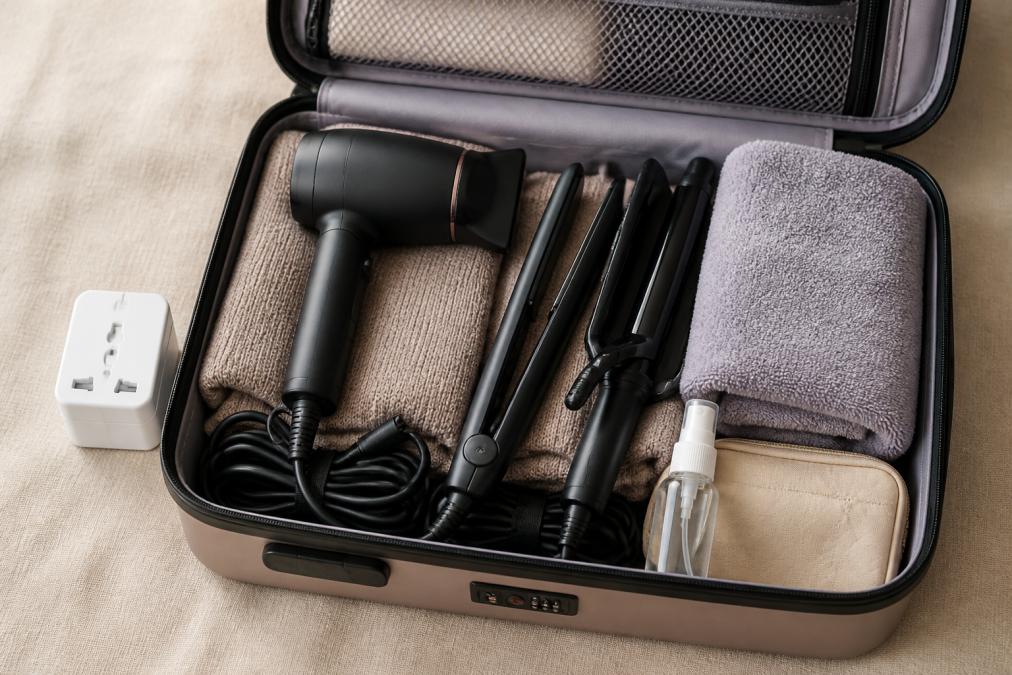
The Chaska Air Styler dries, straightens, and curls hair in one device, eliminating three separate tools. Its Twin Turbo fans and patented heat plate technology work across all hair types.

Pack a microfiber towel to reduce drying time and frizz, a leave-in conditioner for touch-ups, and the CHASKA Moisture Rich Heat Protectant, which shields hair from heat damage with argan oil and silicones.
Pack bobby pins, hair ties, a wide-toothed comb, and silk scarves, they protect hair while sleeping and double as accessories.
Understand International Voltage and Adapter Compatibility
Hair styling tools designed for U.S. voltage (120V) will overheat or fail at international outlets (220-240V), damaging both the tool and electrical system.
Verify your tool's voltage specifications. Look for "100-240V" on the device, this means it's dual-voltage and safe worldwide with only a plug adapter. A plug adapter changes the physical shape of prongs; it does NOT convert voltage.
Single-voltage tools (120V) require a voltage converter, which is bulkier and heavier than an adapter.
The Chaska Air Styler is engineered for modern travel. Its dual-voltage capability means you can use it worldwide with just a lightweight plug adapter. This eliminates one major piece of packing stress and ensures you can style hair while traveling with the same tool you use at home.
Test your voltage converter or adapter at home to ensure your styling tool operates normally.
Master Heat-Free Styling Techniques
Heat-free styling methods maintain hair health during travel, work across all hair types, and require minimal equipment.
Braid Waves and Overnight Methods
For braid waves, dampen hair, divide into 2-3 sections, braid loosely, and sleep in them overnight for soft waves. Works best on shoulder-length hair.
The plop method wraps damp hair in a microfiber towel for 15-30 minutes to form gentle waves and curls without heat.
Protective Styling for Long-Haul Flights
Aircraft cabin air is extremely dry and causes frizz. Protective hairstyles minimize damage by containing hair and reducing environmental stress.
Buns and braids keep hair off your face, prevent tangling, and look polished. Secure with bobby pins and a silk scarf to reduce friction.
The key to protective styling on planes is using silk or satin accessories instead of cotton. Cotton creates friction that weakens hair and causes breakage. Silk scarves and hair ties glide smoothly, protecting your hair's cuticle layer during hours of sitting and sleeping.
Create Easy Vacation Hairstyles for Travel
Vacation hairstyles should be simple to execute in a hotel bathroom and work with your natural texture.
Ponytails work for every hair type. Use leave-in conditioner or styling cream to smooth flyaways and add definition.
Half-up styles work on second-day hair and hide an unwashed scalp in 30 seconds.
Silk scarves and hair clips elevate simple styles while holding hair in place.
For curly and wavy hair, embrace your natural texture. Use a styling cream or gel to define curls, then let them dry naturally or with your styling tool set to low heat. Curls and waves photograph beautifully and require minimal daily styling.
Navigate TSA and Airline Liquid Restrictions
Understanding liquid restrictions prevents confiscation and lets you maintain a full hair routine without sacrificing carry-on space.
The TSA 3-1-1 rule limits liquids, gels, and creams to 3.4 ounces per container in a quart-sized bag. Spray dry shampoo counts as liquid; powder does not.
Solid-State Alternatives That Bypass Restrictions
Solid products bypass these restrictions entirely and deserve priority in your packing strategy. Solid conditioner bars deliver the same benefits as 2-3 liquid bottles in a deck-of-cards size and last 50-80 washes. Hair wax, pomade, styling paste, and powder dry shampoo are unlimited in carry-on luggage.
Practical Packing Strategies for Liquid Products
Transfer liquids into 3.4-ounce containers before departure. A spray bottle holds enough leave-in conditioner for two weeks with 2-3 spritzes per session. The CHASKA Moisture Rich Heat Protectant covers 10-14 days in a 3.4-ounce bottle.

Pre-made travel sets at drugstores cost less than full-size bottles and include TSA-compliant 1-2 ounce bottles.
Checked Luggage vs. Carry-On Trade-Offs
Full-size bottles are permitted in checked bags, but checked bags risk delays or loss. Keep styling essentials in carry-on for accessibility.
CHASKA Air Styler - 3-in-1 Hair Dryer →
Styling Tools and Equipment
Blow dryers, flat irons, curling irons, and all-in-one styling tools like the Chaska Air Styler are permitted in both carry-on and checked bags. There are no wattage or voltage restrictions on the tool itself, only on liquids and gels. This means your primary styling tool should always travel in your carry-on to ensure it's available when you need it.
International Airline Variations
International flights may have stricter liquid limits (100 milliliters) than domestic travel. Check your airline's website or call directly for clarity on regulations.
Adapt Your Hair Care to Different Climates
Different climates and transit stressors require distinct product and styling strategies to maintain your style throughout your trip.
Hair Care During Long-Haul Flights and Transit
Aircraft cabin air (10-20% humidity) strips moisture rapidly, causing frizz and brittleness. Trains and cars expose hair to drafts, air conditioning, and friction.
Before boarding, apply leave-in conditioner to damp hair to slow evaporation. Wrap hair in silk to reduce friction and moisture loss. Avoid heat styling on flight days; use protective styles instead.
For flights longer than 8 hours, mist your hair with a hydrating spray every 2-3 hours. A small 1-ounce spray bottle fits in your carry-on and prevents the cumulative drying effect of extended cabin exposure. Apply leave-in conditioner to the ends and mid-lengths, where moisture loss is most visible.
On trains and in cars, keep windows closed when possible and use air conditioning sparingly. If you're driving, tie hair back to prevent wind damage. On trains, a silk scarf protects hair from window drafts and reduces friction against seat backs during sleep.
High-Humidity Tropical Destinations
High humidity (70%+ relative humidity) causes hair to absorb moisture from the air, swelling the hair shaft and creating frizz. This effect is most pronounced in tropical regions, coastal areas, and during summer months in temperate zones.
In humid climates, frizz control becomes your priority. Apply leave-in conditioner to damp hair before it dries completely; the conditioner seals the cuticle and reduces moisture absorption. Use a styling tool set to low or medium heat to seal the hair cuticle further. A microfiber towel prevents the rough friction that exacerbates frizz. Consider protective styles like braids or buns that minimize frizz exposure and keep hair off your face in hot, humid weather.
Use a lightweight styling cream or gel rather than heavy oils or butters, which can feel greasy in humidity. The CHASKA Moisture Rich Heat Protectant's silicone blend creates a moisture barrier. Dry shampoo in powder form (not spray) absorbs excess oil and adds texture without adding moisture.
If you're swimming in chlorinated pools or salt water, wet your hair with fresh water and apply leave-in conditioner before swimming. This prevents your hair from absorbing chlorine or salt, which damages the cuticle and causes dryness. Rinse immediately after swimming and apply conditioner again.
Dry and Arid Climates
Dry climates (below 30% relative humidity) strip moisture from hair rapidly. Desert regions, high-altitude destinations, and winter travel in cold climates all create this challenge. Hair becomes brittle, prone to breakage, and difficult to style.
In dry climates, focus on moisture retention and protection. Increase your use of leave-in conditioner and styling creams. Apply heat protectant before using any styling tools; the CHASKA Moisture Rich Heat Protectant's argan oil and silicones create a moisture barrier that prevents drying. Avoid excessive heat styling, which accelerates moisture loss. Limit hair washing to every 2-3 days; frequent washing strips natural oils that protect your scalp and strands.
Use a humidifier in your hotel room if available, or place a damp towel near your bed while sleeping. This adds moisture to the air around your hair. Deep condition every 2-3 days with a hydrating mask; apply a generous amount, wait 10-15 minutes, then rinse with cool water.
UV exposure is intensified in dry climates, especially at high altitudes. Wear a hat or use a leave-in product with UV protection when spending extended time outdoors. UV rays damage hair just like they damage skin, causing color fading and cuticle deterioration.
Temperature Fluctuations and Altitude Effects
Temperature shifts between air-conditioned indoors and hot outdoors stress hair.
Destination-Specific Preparation
Maintain Hair Health During International Travel
Travel stress, jet lag, irregular sleep, dry cabin air, chlorinated pools, compounds the damage from heat styling and climate changes. A simplified maintenance routine protects your hair investment while traveling.
Frequently Asked Questions
What's the best hairstyle to wear on a long-haul flight?
Protective hairstyles work best on long flights. A loose braid, low bun, or ponytail keeps hair secure and reduces friction against headrests and pillows. Avoid tight styles that can cause tension headaches during extended wear. Before boarding, apply a leave-in conditioner to keep your hair moisturized throughout the flight, and use a silk scarf to reduce frizz and breakage while sleeping.
How do I manage hair styling with different voltage outlets internationally?
The CHASKA Air Styler operates on dual voltage (110-240V), but always check your tool's specifications before traveling. Bring a universal voltage converter and the correct plug adapter for your destination. Test your tool at your accommodation before styling to ensure it's working properly. If your tool isn't dual voltage, use a step-down converter, though this adds weight to your luggage.
What compact hair tools should I pack for international travel?
Choose a multi-function tool that combines drying, straightening, and curling in one device. The CHASKA Air Styler ($249) eliminates the need for multiple tools while delivering salon-quality results with its plasma technology and twin turbo fans. Pair it with a microfiber towel, travel-size heat protectant, and a few bobby pins. This minimalist approach saves luggage space and reduces styling time in unfamiliar bathrooms.
Can I bring liquid hair products through airport security?
The TSA allows liquids, gels, and creams in containers of 3.4 ounces (100 milliliters) or smaller in your carry-on bag. Pack these in a clear quart-sized bag. For longer trips, buy travel-size versions or transfer products into smaller containers before departure. The CHASKA Moisture Rich Heat Protectant ($24) should be decanted into a travel bottle to comply with restrictions. Check your airline's specific rules, as some have stricter policies than the TSA baseline.