


Air Styling vs Heat Styling: Which Is Better for Hair?
Table of Contents
- Understanding Air Styling vs Heat Styling
- How Air Styling Protects Hair: Porosity and Moisture Retention
- Is Blow Drying Better Than Air Drying for Hair Health?
- Air Styler vs Curling Iron Damage: What the Science Shows
- How to Curl Hair With Air Styling Technology
- Choosing the Right Air Styling Method for Your Hair Type
- Conclusion
Last Updated: August 21, 2026
Understanding Air Styling vs Heat Styling
Air styling uses focused airflow without direct heat, while heat styling applies thermal energy directly to reshape hair. Air styling takes longer but causes less acute stress; heat styling is faster but demands more maintenance. Neither is objectively superior, what matters is matching the method to your hair type and lifestyle.
How Air Styling Protects Hair: Porosity and Moisture Retention
Hair porosity determines how easily your hair absorbs and retains moisture. Low-porosity hair has a tightly sealed cuticle; high-porosity hair has a raised, open cuticle that absorbs moisture quickly but struggles to retain it.
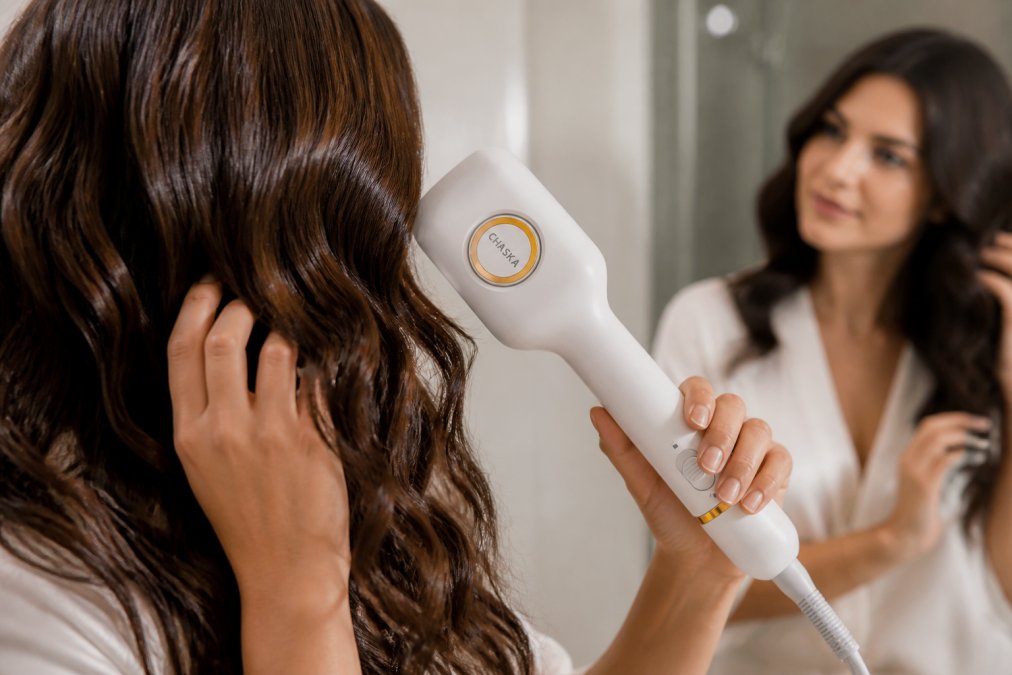
Air drying works well for low-porosity hair because moisture gradually penetrates without the shock of direct heat. For high-porosity hair, extended air drying can cause hygral fatigue, repeated swelling and shrinking of the hair shaft as moisture enters and exits. When high-porosity hair stays damp for hours, the cuticle remains open and vulnerable, weakening the hair shaft over time (peer-reviewed research).
Scalp health also matters. When hair stays damp against your scalp for extended periods, bacteria and fungi can thrive. Faster drying reduces this risk, especially if you have a sensitive scalp.
Is Blow Drying Better Than Air Drying for Hair Health?
Neither is objectively superior. Blow drying is faster and more controllable; air drying eliminates direct heat but introduces time as a variable. Extended damp periods can cause hygral fatigue in high-porosity hair and increase scalp issues. Additionally, damp hair is more fragile than dry hair, the protein bonds are weakened when saturated with water, making rough handling cause more breakage.
Most people don't have 4-6 hours to fully air dry. Partial air drying followed by targeted blow drying is often the best compromise: you reduce overall heat exposure while avoiding extended moisture saturation.
Research suggests the method matters less than consistency and technique. Rough handling, excessive heat, and poor product choices cause more damage than the choice between air drying and blow drying.
Air Styler vs Curling Iron Damage: What the Science Shows
A traditional curling iron applies concentrated heat at 300-400°F with direct barrel contact, causing immediate structural change (peer-reviewed research). An air styler distributes heat over a larger area at lower temperatures through heated airflow, making it gentler per unit of time but potentially requiring more passes.

The damage comparison depends on usage. A person using a 400°F curling iron for 10 seconds per section causes different damage than someone using an air styler at 250°F for 30 seconds. Many people report that air stylers take longer to achieve the same curl definition as a dedicated curling iron.
Hair elasticity matters. Hair with good elasticity can handle more styling stress; hair with poor elasticity is more vulnerable to breakage. An air styler's gentler approach may be better for damaged hair, while a curling iron might work fine for healthy, elastic hair.
The real advantage of an air styler is versatility and time efficiency. Instead of reaching for three separate tools, you use one, reducing total heat exposure over weeks and months.
How to Curl Hair With Air Styling Technology
Start with damp hair, about 60-70% dry. Towel-dry until it's malleable but not soaking wet.
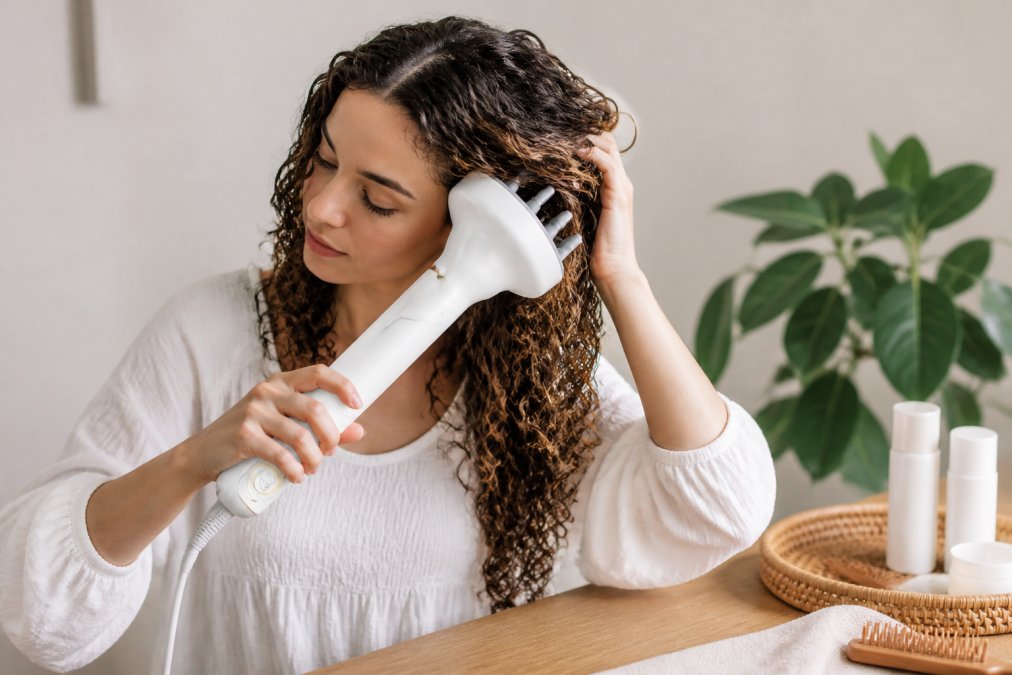
Apply a curl-enhancing product, mousse, curl cream, or styling gel, to define the curl pattern and provide hold as the hair dries.
Section your hair into manageable 1-2 inch pieces. Smaller sections curl more effectively than large ones.
For each section, use the air styler's curl attachment or diffuser setting. Hold the section against the diffuser and allow the airflow and heat to work through it for 30-60 seconds.
Let each section cool before releasing it. The curl sets as the hair cools, so releasing while warm will cause the curl to drop. Use a cool-shot setting if available, or wait 20-30 seconds.
Repeat systematically through your hair. Total time is typically 15-25 minutes depending on hair thickness and length.
Air stylers typically produce softer, more natural-looking curls than traditional curling irons. If you want tight, dramatic curls, a curling iron delivers more consistent results. If you want waves or loose curls with less frizz and damage, an air styler works well.
The Chaska Life's 3-in-1 Air Styler is engineered for versatile styling, allowing you to dry, straighten, and curl without switching between three separate tools. For frequent travelers or those wanting to minimize tool clutter, this all-in-one approach simplifies your routine while delivering professional results.
Choosing the Right Air Styling Method for Your Hair Type
Fine or thin hair typically benefits from air styling or low-heat methods. Fine hair is fragile and heat-sensitive; air drying preserves integrity. Fine hair also dries faster, making air drying more practical time-wise.
Thick or coarse hair usually needs more heat to style effectively. The hair shaft is stronger and more resistant to damage. Thick hair takes longer to air dry, making a combination approach, air dry to 50% then use controlled heat, often best.
Curly or textured hair has higher porosity on average, making it prone to frizz. Air drying works well with the right products and technique. An air styler with a diffuser attachment maintains the curl pattern while drying faster than full air drying.
Straight hair can work with any method. Many people with straight hair prefer blow drying or an air styler's straightening function for more control and body.
Damaged or bleached hair needs gentler treatment. Minimizing additional heat exposure is important. Air styling or low-heat methods are better choices. An air styler's all-in-one functionality reduces total heat exposure by eliminating tool switching.
High-porosity hair often suffers from extended air drying due to hygral fatigue. These hair types typically benefit from faster drying methods that close the cuticle efficiently.
Low-porosity hair can struggle with traditional blow drying because heat doesn't penetrate effectively (peer-reviewed research). Air drying or gentler heat methods allow moisture to gradually absorb.
Conclusion
Air styling is better for hair when your hair is fine, low-porosity, or previously damaged by heat. It's not automatically better for all hair types. The choice depends on your hair's porosity, density, texture, and available time.
Most people benefit from a combination: air dry to reduce overall heat exposure, then use controlled heat for final styling. This minimizes damage while delivering results in a reasonable timeframe.
For busy professionals, frequent travelers, and anyone tired of managing multiple styling tools, The Chaska Life's 3-in-1 Air Styler simplifies the equation. By combining drying, straightening, and curling in one tool, it reduces total heat exposure time. At $169, it's an investment in both hair health and daily efficiency. Get started with The Chaska Life Air Styler and discover how a single, thoughtfully designed tool can transform your styling routine while protecting your hair.
| Hair Type | Best Drying Method | Why It Works | Time Estimate |
|---|---|---|---|
| Fine or thin | Air styling or low heat | Reduces breakage risk | 20-30 minutes |
| Thick or coarse | Controlled heat or combination | Provides styling control | 15-25 minutes |
| Curly or textured | Air styling with diffuser | Maintains curl pattern | 25-40 minutes |
| Straight | Blow drying or air styler | Adds volume and shine | 10-20 minutes |
| Damaged or bleached | Air styling or very low heat | Minimizes additional stress | 30-45 minutes |
| High-porosity | Controlled heat or combination | Closes cuticle efficiently | 15-25 minutes |
| Low-porosity | Air styling or gentle heat | Allows gradual moisture absorption | 25-35 minutes |
Frequently Asked Questions
Q: Does air styling cause less breakage than flat irons?
A: Air styling tools generally cause less breakage because they use lower, more controlled heat and airflow rather than direct plate pressure. Flat irons apply concentrated heat directly to the hair shaft, which can damage the cuticle layer and cause split ends with repeated use. Air styling distributes heat more evenly, reducing thermal damage and hair breakage. However, the actual damage depends on temperature settings, technique, and how often you style. Using a heat protectant product with either method significantly reduces breakage risk.
Q: Is air styling better for hair than traditional heat styling?
A: Air styling is generally better for long-term hair health because it minimizes thermal damage and hygral fatigue, the damage caused by repeated swelling and shrinking of the hair shaft. Traditional heat styling applies direct, concentrated heat that can damage the hair cuticle and cause split ends. Air styling tools like the Chaska Air Styler use controlled airflow to dry and style without excessive heat exposure. The difference is most noticeable with frequent styling, air methods preserve elasticity and shine better over time.
Q: Can air styling tools work on thick, curly hair?
A: Yes, air styling tools work effectively on thick, curly hair when you use the right technique and attachments. Thick, curly hair has higher density and often lower porosity, which means it requires adequate airflow and heat to style properly. A diffuser attachment (included with many air styling tools) disperses air gently across curls, enhancing natural texture without frizz. The Chaska Air Styler is designed for all hair types, including thick and curly textures.
Q: What is the healthiest way to heat style your hair?
A: The healthiest approach combines three factors: lower temperatures (below 350°F), protective products, and proper technique. Always apply a heat protectant product before styling to shield the hair cuticle from thermal damage. Use air styling methods when possible, as they distribute heat more evenly than direct-contact tools. Allow your hair to air dry partially before using heat, and avoid styling the same sections repeatedly. Limit heat styling to 2-3 times per week when possible, and maintain regular deep conditioning to restore moisture and elasticity.
This article was written using GrandRanker