


Best Hair Styler for Curly Hair: A 2026 Guide
Table of Contents
- What Makes the Best Hair Styler for Curly Hair
- Best Hair Multi-Styler for Thick Curly Hair
- Barrel Size, Heat Settings, and Styling Versatility
- Heat Protection for Curly Hair: Avoiding Damage While Styling
- How to Avoid Heat Styling Damage Without Sacrificing Results
- Ionic Technology, Ceramic Coatings, and Hair Health
- Styling Curly Hair by Porosity and Curl Pattern
- Conclusion
Last Updated: August 27, 2026
What Makes the Best Hair Styler for Curly Hair
The best hair styler for curly hair combines variable temperature control, ionic technology, and a design optimized for curl definition. Most multi-function styling tools compromise on textured hair. The difference between a tool that merely works and one that enhances your curls comes down to airflow speed, heat distribution, and whether the device was engineered with curly hair in mind.
Curly hair requires moisture retention and frizz control during styling, not just heat application. The best options feature ceramic coatings or tourmaline technology to reduce heat damage, dual-speed settings to prevent over-drying, and attachments like diffusers that work with your curl pattern.
At The Chaska Life, we've analyzed what separates professional results from mediocre ones. The answer isn't always the most expensive tool, it's the one that matches your specific hair needs: thickness, porosity, curl pattern, and styling goals. This guide walks you through the essentials so you can choose the right tool without guesswork.
Best Hair Multi-Styler for Thick Curly Hair
For thick, coarse curly hair, the CHASKA Air Styler stands out as the top choice. This all-in-one tool combines a hair dryer, straightener, and curler in a single device engineered specifically for demanding hair types. The twin turbo fans deliver the drying power needed for thick curls without multiple passes, while the patented heat plate technology maintains consistent temperature across the barrel, critical for preventing hot spots that cause frizz and damage.

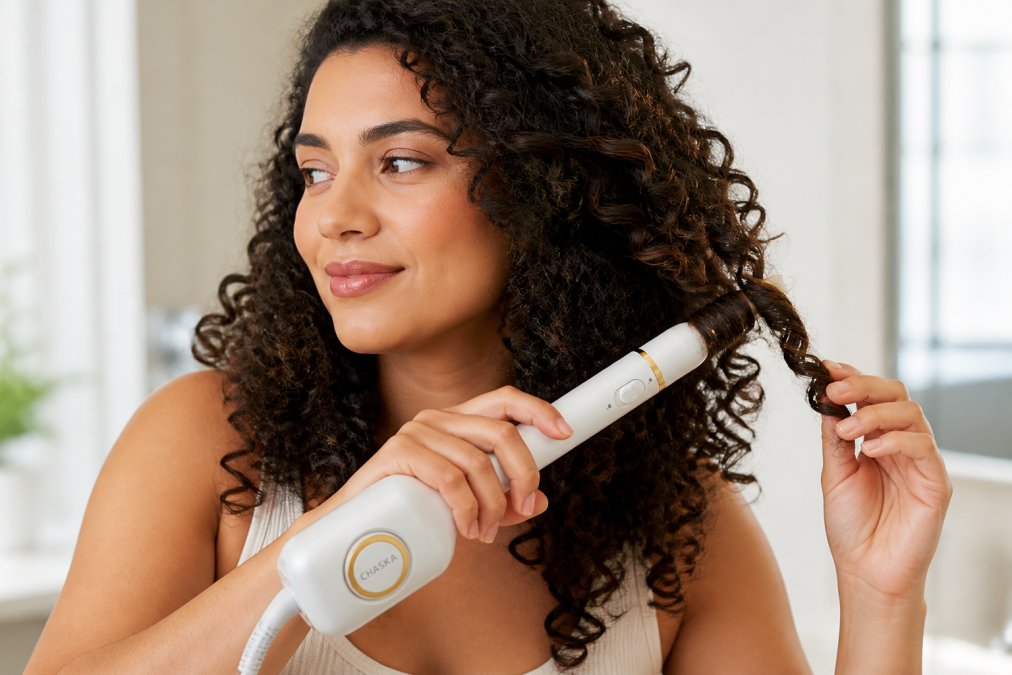
Most people with thick curly hair end up buying a blow dryer, flat iron, and curling iron separately, three tools, three cords, and three different heat profiles to manage. The CHASKA Air Styler eliminates that complexity. You get professional drying power, straightening capability, and curl-creating function from one device. For busy professionals and frequent travelers, this single-tool approach saves time and space without sacrificing results.
Priced at $249.00, this represents a practical consolidation. A quality blow dryer ($80-150), flat iron ($60-120), and curling iron ($50-100) typically run $200-350 combined. The CHASKA Air Styler delivers all three functions in one compact tool.
Barrel Size, Heat Settings, and Styling Versatility
Barrel size directly determines what curl sizes you can create. Smaller barrels (0.75-1 inch) produce tight, defined curls. Medium barrels (1.25-1.5 inches) create loose waves and natural-looking curls. Larger barrels (1.75-2 inches) provide volume and flowing styles. For thick curly hair wanting defined curls, choose a barrel matching your natural curl diameter, usually 1-1.5 inches.
Variable temperature settings matter more for curly hair than any other hair type. Fine curls work best at 300-350°F, medium curls at 300-350°F, and thick coarse curls at 350-400°F (peer-reviewed research). Fixed-temperature tools force a one-size-fits-all approach. The CHASKA Air Styler's adjustable heat settings let you dial in the exact temperature your hair needs, preventing overstyling and damage.
Styling versatility comes from three factors: barrel options, heat range, and airflow control. A tool with interchangeable barrels, adjustable heat, and variable airflow speed handles tight curls, loose waves, volume work, and sleek styles, essential if you style differently on different days or your hair changes with seasons and humidity.
Heat Protection for Curly Hair: Avoiding Damage While Styling
Heat damage on curly hair causes loss of natural spring, frizz, and split ends that make the curl pattern look undefined (the American Academy of Dermatology). Curly hair is more vulnerable because the curved structure creates stress points where cuticle layers are already slightly raised.
Thermal protection products create a barrier between your hair and direct heat. A leave-in conditioner or heat-protectant spray coats strands with a moisture-rich layer that absorbs heat before it reaches your hair's protein structure. Apply thermal protection before any heat styling, even at low temperatures.
Ceramic coatings distribute heat evenly, preventing hot spots that cause localized damage. Tourmaline technology generates negative ions that reduce frizz and seal the hair cuticle. Ionic technology, when properly implemented, improves hair health during styling rather than just preventing damage.
Temperature control is your primary defense against heat damage. A tool letting you dial down to 250°F for fine curls or up to 400°F for thick hair gives you precise control. You're using the tool precisely rather than fighting it.
How to Avoid Heat Styling Damage Without Sacrificing Results
Heat styling gives you definition and control, but also causes damage. You can't eliminate heat styling if you want polished results, but you can minimize damage through three practices: matching heat to hair type, using thermal protection, and limiting styling frequency.
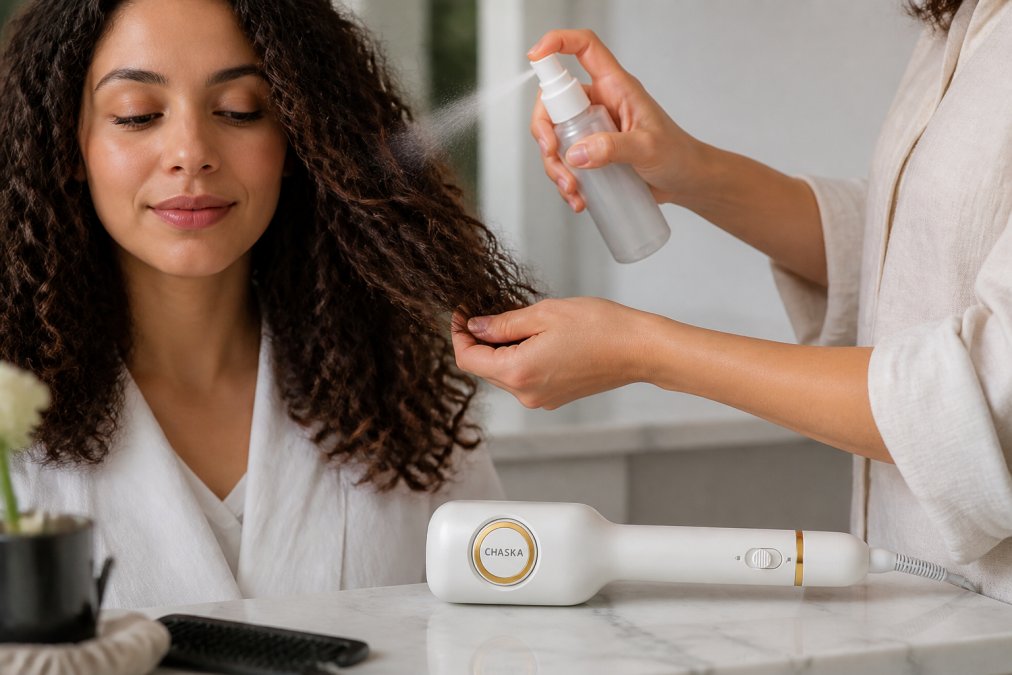
Apply thermal protection spray to damp hair before any heat styling. This single step cuts heat damage significantly. Let the spray dry for 30 seconds before styling.
Use the lowest heat setting that produces your desired result. If you achieve your style at 300°F instead of 350°F, do it. The styling time difference is minimal, but the damage reduction is substantial.
Limit heat styling to 2-3 times per week if possible. On other days, use a refresher tool or diffuser attachment to reactivate curls without full heat styling. Many multi-stylers include a diffuser attachment that uses lower heat and dispersed airflow.
Section your hair before styling and work methodically. Divide your hair into 4-6 sections, pin up what you're not working on, and style each section once. This reduces total heat exposure and produces consistent results.
Allow your hair to cool after styling before touching it. Heat styling sets the curl shape while warm. Once cool, the curl locks into place. Manipulating warm curls undoes the styling and forces rework.
Ionic Technology, Ceramic Coatings, and Hair Health
Ionic technology generates negative ions that neutralize positive charge in your hair (peer-reviewed research). When positively charged, the cuticle layers stand up, creating frizz. Negative ions seal cuticles flat, creating a smooth surface that reflects light and looks shinier. Sealed cuticles also retain moisture better, critical for curly hair health.
Ceramic coatings provide even heat distribution across the barrel, preventing hot spots that cause localized damage. A ceramic-coated barrel heats to consistent temperature across its entire surface.
Tourmaline, when ground into powder and applied to styling tool barrels, enhances ionic technology. Tourmaline naturally generates negative ions and far-infrared heat, which penetrates hair more gently than direct surface heat.
The combination matters more than any single technology. A ceramic barrel with ionic technology is better than ceramic alone. A tourmaline-ceramic barrel is better still. Prioritize heat distribution consistency first, then look for ionic and tourmaline enhancements.
For curly hair, ionic technology is worth the investment. Curly hair is more prone to frizz because the curved structure naturally creates raised cuticle layers. Ionic technology actively seals those cuticles, reducing frizz and creating definition.
Styling Curly Hair by Porosity and Curl Pattern
Hair porosity refers to how easily your hair absorbs and retains moisture. Low-porosity hair has tightly closed cuticles that resist moisture absorption. High-porosity hair has raised cuticles that absorb moisture quickly but lose it quickly. Your curl pattern, loose waves (Type 2), coily curls (Type 3), or tightly coiled curls (Type 4), determines how much definition you need and how heat affects styling.
Low-porosity curly hair needs lower heat (250-300°F) and shorter styling times. Use ionic technology to prevent the moisture loss already challenging for this hair type.
High-porosity curly hair can handle higher heat (300-350°F) because it absorbs moisture readily. Focus on thermal protection and moisture-rich products before styling. After styling, use a cool-shot button to seal cuticles and lock in moisture.
Type 2 waves need minimal barrel size (0.75-1 inch) and lower heat (250-300°F). Type 3 curls benefit from 1-1.5 inch barrels and 300-350°F heat. Type 4 curls often need 1.5-inch barrels and can handle 350-400°F, but require more thermal protection.
Matching your styling approach to your porosity and curl pattern prevents overstyling or understyling. A tool accommodating both, like the CHASKA Air Styler with adjustable heat and multiple barrel options, lets you customize styling to your actual hair needs.
Conclusion
Choosing the best hair styler for curly hair means prioritizing heat control, moisture retention, and curl-specific design over generic multi-functionality. The CHASKA Air Styler addresses the core challenge: most multi-function tools compromise on each function. This tool doesn't. It delivers genuine drying power, straightening capability, and curl-creation function through a unified design that maintains consistent heat and airflow across all three functions. At $249.00, it consolidates three separate tools into one compact device engineered specifically for curly hair. Get started with the CHASKA Air Styler and experience how the right tool transforms your styling routine into a reliable way to achieve professional results at home.
Frequently Asked Questions
Q: Can a multi-styler effectively straighten thick, curly hair?
A: Yes, modern multi-stylers with variable temperature settings can straighten thick, curly hair when equipped with proper heat distribution and ionic technology. The key is choosing a tool with sufficient wattage and ceramic or tourmaline plates that maintain consistent heat. The Chaska Air Styler ($249), for example, uses patented heat plates and Twin Turbo fans to deliver professional straightening power, while maintaining the ability to dry and curl. Results depend on technique and hair preparation, applying thermal protection and working in smaller sections yields salon-quality straightness.
Q: What's the difference between ionic and ceramic technology for curly hair?
A: Ionic technology breaks water molecules into smaller particles, speeding drying and reducing frizz by sealing the hair cuticle. Ceramic coatings distribute heat evenly, preventing hot spots that cause damage. For curly hair, ionic technology excels at frizz control and moisture retention, while ceramic ensures consistent heat that defines curls without burning. Many professional tools combine both: ionic for smoothness and ceramic for even heat distribution. This combination is especially beneficial for textured hair prone to frizz and heat damage.
Q: How do I choose the right barrel size for my curl type?
A: Barrel size directly affects curl definition and volume. Smaller barrels (0.5-1 inch) create tight, defined curls and work best for fine or medium curly hair. Medium barrels (1-1.5 inches) suit most curl patterns and offer styling versatility. Larger barrels (1.5+ inches) create loose waves and voluminous curls, ideal for thick, coarse hair or when you want a blowout effect. Consider your natural curl pattern: Type 2 waves benefit from smaller barrels for definition, while Type 3-4 coils work well with medium to large barrels to avoid over-curling. Multi-stylers with interchangeable attachments let you adapt to different styling goals.
Q: Is using one styling tool instead of multiple tools worse for my hair?
A: No, using a single, high-quality multi-styler with proper heat protection is often better than using multiple lower-quality tools. Fewer tool transitions mean less cumulative heat exposure and handling stress. The critical factor is the tool's heat distribution technology and your technique. All-in-one tools like the Chaska Air Styler reduce overall styling time, which limits total heat exposure. Using a thermal protection spray before styling and a cool shot button after styling further minimizes damage, regardless of whether you use one tool or many.
This article was written using GrandRanker