


Best T3 Micro Alternatives for Fine Hair in 2026
Table of Contents
- Why Fine Hair Needs a Different Styling Tool
- T3 Micro Alternatives for Fine Hair: The Comparison
- The Chaska Air Styler: A Top T3 Micro Alternative for Fine Hair
- What Makes the Best Hair Dryer for Fine Hair?
- How to Add Volume to Fine Hair Without Weighing It Down
- Preventing Heat Damage on Fine Hair: Key Features to Look For
- Final Verdict: Choosing the Right Styler for Your Hair Type
- Frequently Asked Questions
Last Updated: September 7, 2026
Why Fine Hair Needs a Different Styling Tool
Fine hair lacks the density and structural weight of thicker strands, so it responds to heat faster, shows damage sooner, and collapses under heavy products (peer-reviewed research). A styling tool for fine hair must prioritize gentle, even heat distribution and a design that lifts the root rather than flattening the strand.
Hair porosity determines how quickly strands absorb and release moisture. Low-porosity fine hair resists moisture and can become brittle under high heat, while high-porosity fine hair loses moisture rapidly and needs lower temperatures with faster styling times (peer-reviewed research).
Fine hair needs volume at the root and smoothness through the mid-lengths, without the weight that drags it down. A tool that dries, straightens, and curls in one pass, with adjustable heat and a design that lifts the hair away from the scalp, addresses this directly.
T3 Micro Alternatives for Fine Hair: The Comparison
When you compare fine hair alternatives, the market splits into categories: traditional blow dryers, flat irons, hot rollers, and the newer all-in-one air stylers, each offering distinct fine hair alternatives. Each handles fine hair differently, and the differences matter more than the brand name on the handle.
| Tool Type | Heat Control | Volume Potential | Damage Risk | Best For |
|---|---|---|---|---|
| Traditional blow dryer | Often high, limited | Moderate with round brush | Medium | Quick drying |
| Flat iron | Adjustable | Low | High | Sleek straight styles |
| Hot rollers | Low, indirect | High | Low | Soft, bouncy curls |
| All-in-one air styler | Precise, low | High | Low | Daily styling, all functions |
Traditional blow dryers require a round brush and technique. Flat irons press hair flat, working against fine hair's tendency to look limp. Hot rollers add volume but take time to set. An all-in-one air styler combines all functions without concentrated heat pressed directly against the strand.

The deciding factor for fine hair is heat recovery time, or how quickly the tool maintains a consistent temperature. Tools that fluctuate cause uneven styling and increase heat damage risk. Look for consistent temperature output and multiple heat settings.
The Chaska Air Styler: A Top T3 Micro Alternative for Fine Hair
For most people with fine hair, the strongest t3 micro alternative is the CHASKA Air Styler. This 3-in-1 tool dries, straightens, and curls in a single device, which directly addresses the needs of fine hair: less time under heat, more control over temperature, and a design that lifts the hair rather than compressing it.
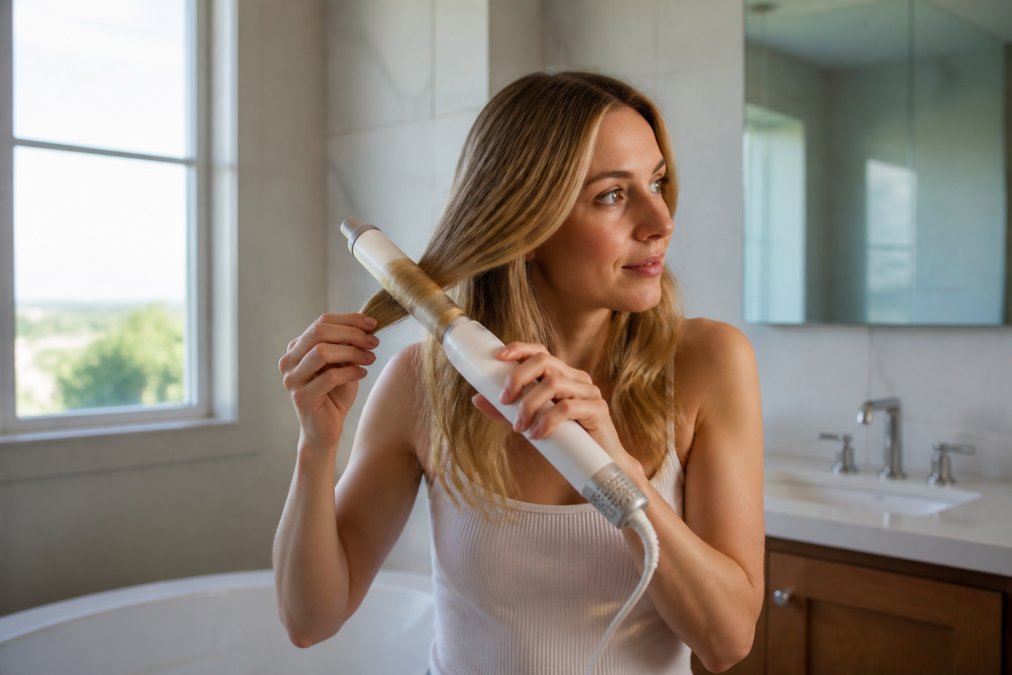
Twin Turbo fans inside the plates double drying power, so you spend less time applying heat. A patented heat plate with plasma technology smooths the cuticle and reduces frizz while preserving moisture.
The Chaska Life designed this tool for all hair types. Because it dries and styles simultaneously, you avoid the double heat exposure of blow drying first and then straightening. Priced at $249.00, it replaces three separate devices.
What Makes the Best Hair Dryer for Fine Hair?
The best hair dryer for fine hair is not just about wattage or brand reputation; it is about how the tool manages heat distribution and airflow relative to your hair's specific porosity. The real differentiator for fine hair is the type of ionic generator and how it interacts with your hair's moisture level.
Ionic Technology: Not All Generators Are Equal
Ionic dryers emit negative ions that break down water molecules, allowing faster evaporation (PubMed). This reduces drying time and seals the cuticle, critical for fine hair. Competing tools use either a ceramic element coated with an ionic mineral or a separate ion generator; the latter is often more effective because it produces a higher ion concentration without relying on the heat element.
For low-porosity fine hair, a dedicated ion generator helps push moisture into the strand rather than letting it bead on the surface. For high-porosity fine hair, the ionic charge helps smooth the raised cuticle, reducing frizz.
Airflow Design and Heat Recovery
Fine hair needs consistent, lower heat with enough airflow to lift the root. Cheaper dryers drop in temperature when airflow is blocked, then spike, causing hot spots. Look for a DC or brushless motor, which maintains a more stable temperature than an AC motor at the same price point.
A narrow concentrator nozzle is essential for fine hair because it directs airflow precisely at the root to build volume. A wide nozzle disperses heat, which works against fine hair's need for targeted lift. The nozzle should also be cool-touch, since fine hair is often styled close to the scalp.
Porosity-Specific Settings
Most dryers offer three heat settings and two speeds, but the best tool for fine hair offers a 'low' setting below 250°F. Ceramic elements heat more evenly than metal coils. Tourmaline-infused ceramic emits far-infrared heat that penetrates the shaft more gently, reducing surface moisture loss.
For low-porosity fine hair, use medium heat with high airflow to open the cuticle just enough to allow moisture in. For high-porosity fine hair, use the lowest heat with medium airflow to avoid further damage. A tool with independent heat and airflow controls lets you match your hair's daily condition.
Ergonomics and Weight Distribution
Styling fine hair often requires holding the dryer at an angle to lift the root, straining the wrist. A dryer heavier than 1.5 pounds causes fatigue, leading to rushed passes. Look for balanced weight distribution, with the motor closer to the handle.
The Bottom Line on Dryers
The best hair dryer for fine hair combines a dedicated ion generator, a ceramic or tourmaline heating element, independent heat and airflow controls, and a narrow concentrator nozzle. These features reduce drying time, minimize heat exposure, and build root lift without weighing hair down.
How to Add Volume to Fine Hair Without Weighing It Down
Volume on fine hair is about technique as much as tool choice. The goal is to lift the hair at the root and create texture through the lengths.
Start with a volumizing mousse or spray on damp roots to add grip. Then dry your hair upside down or with your head tilted forward, directing airflow from roots to ends.
When curling, use a tapered barrel or wrap sections away from your face, leaving ends out for a natural finish. Fine hair holds a curl best when fully dry and slightly cool before release. Let each curl set for a few seconds and resist touching it while warm.
Preventing Heat Damage on Fine Hair: Key Features to Look For
Heat damage is the single biggest threat to fine hair. Because strands are thinner, they reach their thermal limit faster than coarse hair, and the damage is often irreversible. Prevention starts with the tool itself, but for many readers, the damage has already begun.
Prevention: What the Tool Must Do
Look for adjustable temperature control; most practitioners recommend staying below 350°F. Clear heat settings and fast heat recovery allow you to style effectively at lower temperatures.
Thermal protection is non-negotiable. A heat protectant spray creates a barrier between heat and the shaft, reducing moisture loss. Ceramic plates heat evenly and are gentler than metal. The CHASKA Air Styler's plasma technology helps smooth the cuticle and reduce frizz while preserving moisture.
Hair porosity also determines how you should approach heat. Low-porosity hair has a tightly bound cuticle that resists moisture, so it needs lower heat and more time to absorb products. High-porosity hair has gaps in the cuticle, making it prone to moisture loss and damage; it needs the lowest heat possible and a tool that styles quickly. Matching your heat settings to your porosity is the most effective way to protect fine hair over the long term.
Recovery: What to Do If the Damage Is Already Done
If your fine hair shows signs of heat damage, split ends, a rough or straw-like texture, or hair that breaks when you run your fingers through it, stop using high-heat tools immediately. Once the cuticle is damaged, it cannot fully repair itself, but you can prevent further degradation.
Step 1: Cut the Damage Off
Split ends cannot be mended; a trim is the only way to remove them. For fine hair, a trim of 0.5 to 1 inch is usually enough. If damage extends further, a more aggressive cut may be necessary, but this is best decided with a stylist who can assess the breakage.
Step 2: Switch to a Bond-Building Treatment
Bond-building products containing Olaplex's patented bis-aminopropyl diglycol dimaleate reconnect broken disulfide bonds, which give hair strength and are the first to break under excessive heat. A weekly treatment for four to six weeks can significantly improve tensile strength. Look for this ingredient or similar compounds in the first five ingredients.
Step 3: Adjust Your Wash Routine
Heat-damaged fine hair is more porous, absorbing and losing water faster. Use a sulfate-free shampoo and a lightweight conditioner with hydrolyzed proteins, which temporarily fill gaps in the cuticle. Avoid heavy oils or butters, which coat hair and weigh it down without repairing structure.
Step 4: Introduce a Weekly Protein-Moisture Balance
Heat-damaged fine hair needs both protein and moisture, in the right order. Alternate a protein treatment one week with a deep moisture mask the next to prevent overload. Test a wet strand: if it snaps quickly, it needs protein; if it stretches far and does not return, it needs moisture.
Step 5: Use a Leave-In Heat Protectant with UV Filters
Every future heat styling session must include a leave-in protectant. For fine hair, choose a spray or mist rather than a cream or oil, as sprays distribute more evenly. Look for a product with both a thermal barrier and UV filters. Apply to damp hair before blow drying, and reapply a small amount to dry hair before using a flat iron or curling tool.
Long-Term Maintenance for Heat-Damaged Fine Hair
Recovery is a shift in how you style. For the first month after noticing damage, limit heat styling to two times per week. When you do style, use the lowest effective temperature and never pass over the same section more than twice.
A tool like the CHASKA Air Styler, which dries and styles in a single pass, reduces cumulative heat exposure by eliminating the need to blow dry first and then straighten.
The most effective way to prevent heat damage on fine hair is to match the tool's heat output to your hair's porosity and to use a single-pass styling method. If damage has already occurred, a combination of trimming, bond-building treatments, and a protein-moisture rotation can help improve the strand's integrity.
Final Verdict: Choosing the Right Styler for Your Hair Type
Choosing the right styler for fine hair comes down to heat control, styling versatility, and the ability to add volume without damage. A flat iron gives sleek results but works against volume. A blow dryer requires technique and a separate brush. An all-in-one air styler addresses all three in a single pass.
For fine hair, the priority is reducing heat exposure while maximizing lift. The CHASKA Air Styler dries, straightens, and curls with a patented heat plate and Twin Turbo fans, cutting styling time and minimizing repeated heat. Its all-in-one functionality replaces multiple tools.
If your hair is fine and you are tired of tools that flatten your style or leave it damaged, the CHASKA Air Styler is a solution. It delivers salon-quality volume and shine without the guesswork of coordinating multiple devices. Get started with The Chaska Life and style your fine hair with confidence, knowing you are using a tool designed to protect your hair's health while giving you the bouncy, voluminous results you want.
Frequently Asked Questions
Is a multi-styler as good as a dedicated T3 Micro iron for fine hair?
For fine hair, a quality multi-styler can match or exceed a dedicated iron's results. The key is temperature control and airflow. Dedicated tools often have narrower plates, but a multi-styler with adjustable low-heat settings and high airflow, like the Chaska Air Styler, provides more styling versatility without concentrating heat on one spot, which is safer for fragile strands.
What features should I look for in a hair tool for fine hair?
Prioritize adjustable heat settings with a true low-temperature range (under 300°F) to prevent heat damage. Look for ionic technology to reduce frizz and boost shine. Also, consider the tool's weight and barrel size; a smaller barrel helps create tighter curls, while a larger one adds volume at the roots. Ergonomic design matters for comfortable styling.
How can I add volume to fine hair without causing damage?
Start with a volumizing mousse on damp hair. When drying, flip your head upside down and focus the airflow at the roots. Use a round brush to lift hair away from the scalp. Avoid heavy serums and oils that can flatten hair. A tool with a concentrator nozzle directs air precisely, helping you build volume without over-drying or overheating your hair.
Are there budget-friendly alternatives to the T3 Micro that are safe for fine hair?
Yes. You don't need to spend a premium to protect your hair. Look for tools with ceramic or tourmaline plates that offer even heat distribution and ionic features. The Chaska Air Styler offers plasma technology at a competitive price point.