


How Do You Style Deep-Conditioned Natural Hair?
Last Updated: November 13, 2026
Quick Summary
To style deep-conditioned hair, rinse gently with lukewarm water, detangle in sections while hair is still wet, then layer leave-in, light oil, and styler from lightest to heaviest on damp hair. Set your chosen style while damp and leave it alone until fully dry before breaking any gel cast.
- Rinse until water runs mostly clear, not completely clear, to keep slip for detangling.
- Apply leave-in first, then a few drops of light oil, then styling cream or gel.
- Leave deep conditioner in for 15 to 30 minutes for most formulas, checking the label first.
- Deep condition every one to two weeks for most natural hair textures.
- Sleep on satin or silk to reduce friction and keep moisture in your style.
Table of Contents
- Why Deep Conditioning Changes How You Should Style Natural Hair
- How to Style Natural Hair After Deep Conditioning: A Step-by-Step Routine
- How Long to Leave Deep Conditioner in Natural Hair
- How Often to Deep Condition Natural Hair
- Homemade Deep Conditioner for 4C Natural Hair
- Matching Your Style to Length, Density, Porosity, and Shrinkage
- Avoiding Over-Conditioning, Buildup, and Heat Damage
- Build Your Post-Conditioning Styling Kit with The Chaska Life
- Frequently Asked Questions
Why Deep Conditioning Changes How You Should Style Natural Hair
Deep conditioning is a treatment, not a styling step, and that distinction changes everything about how you style deep-conditioned hair. According to a peer-reviewed review of hair care physicochemistry, conditioning alters the hair's surface and moisture balance, which means your styling products and techniques need to match that new state.
Here's the core problem. Deep conditioner leaves the cuticle smoothed and the strand loaded with moisture. Style it with heavy products or high heat right away, and you undo the treatment.
What Deep Conditioning Actually Does to the Cuticle
Deep conditioner fills the gaps in the hair's outer layer and smooths the cuticle down. That outer layer, the cuticle, is the part that controls how hair feels, reflects light, and holds shape.
A smoothed cuticle means:
- More slip and easier detangling
- Better light reflection, so more shine
- Softer strands that hold moisture longer
- Less friction, which means less breakage
But a smoothed cuticle is also more prone to weighing down. That's why the styling routine below matters so much.
How to Style Natural Hair After Deep Conditioning: A Step-by-Step Routine
Styling natural hair after deep conditioning works best when you rinse gently, detangle in sections, layer products from lightest to heaviest, and set the style while hair is still damp. This routine keeps the moisture you just added without smothering it.
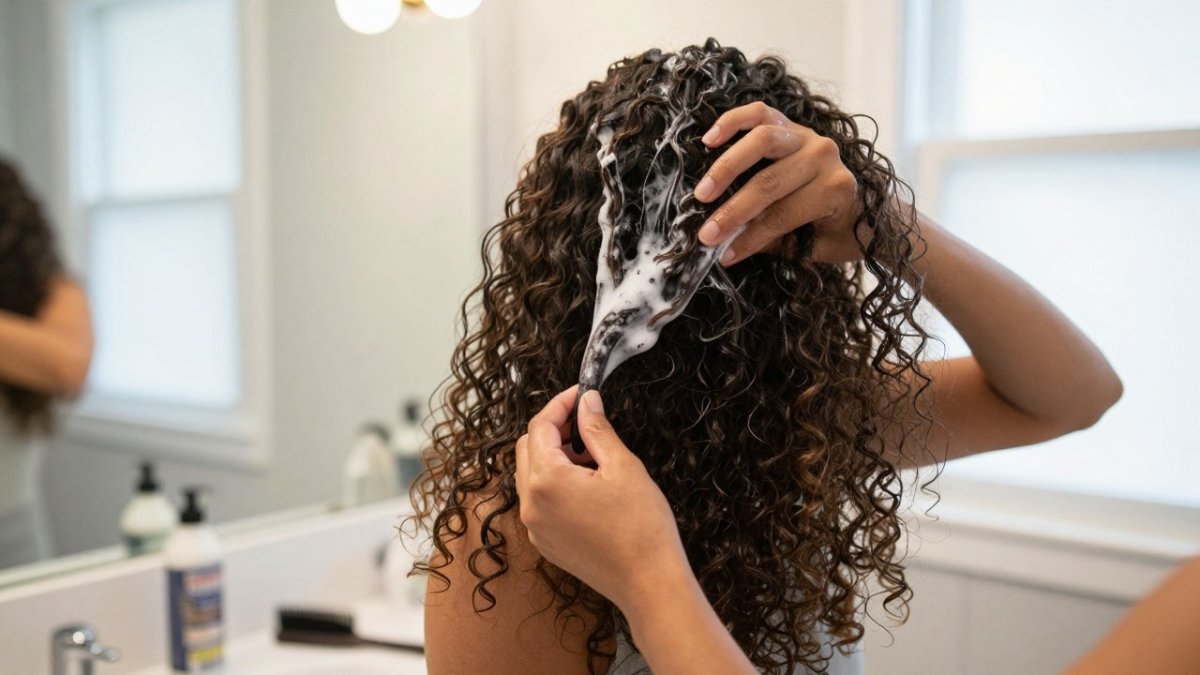
Step 1: Rinse, Don't Scrub
Rinse with lukewarm water and let the water do the work. Scrubbing strips the conditioner out of the cuticle before it can settle. Many people find that a full shampoo after deep conditioning is unnecessary, especially when the scalp is not oily.
Watch out: rinsing until the water runs completely clear can remove the slip you need for detangling. Stop when the water runs mostly clear and the hair still feels slick.
Step 2: Detangle in Sections Before You Layer Anything
This is the step most routines skip. While the hair is still wet and coated with residual conditioner, divide it into four to eight sections, depending on density.
A common pattern is to detangle with fingers first, then a wide-tooth comb, then a finer comb only if your texture tolerates it. Keep a spray bottle of water nearby to re-wet sections that start to dry.
Step 3: Layer Leave-In, Oil, and Styler in the Right Order
Order matters more than most guides admit. Apply in this sequence on damp, not dripping, hair:
- Leave-in conditioner on damp hair, focusing on mid-lengths and ends
- Light oil to seal in moisture, a few drops only
- Styling product, such as a cream or gel, to define and hold
A common mistake is applying oil before leave-in. Oil seals the strand, so anything applied after it sits on top instead of soaking in.
Product compatibility is where layering goes wrong. Water-based leave-ins and creams layer cleanly under a gel.
Watch out: piling on leave-in, oil, and cream to fix dryness usually creates buildup that weighs hair down and blocks the styler from setting.
Step 4: Choose Your Style and Set It
Pick a style that suits your hair type and the time you have. Then set it while hair is damp and leave it alone until fully dry.
Drying method matters as much as product. Air-drying preserves the most moisture but takes hours and can leave hair damp at the roots.
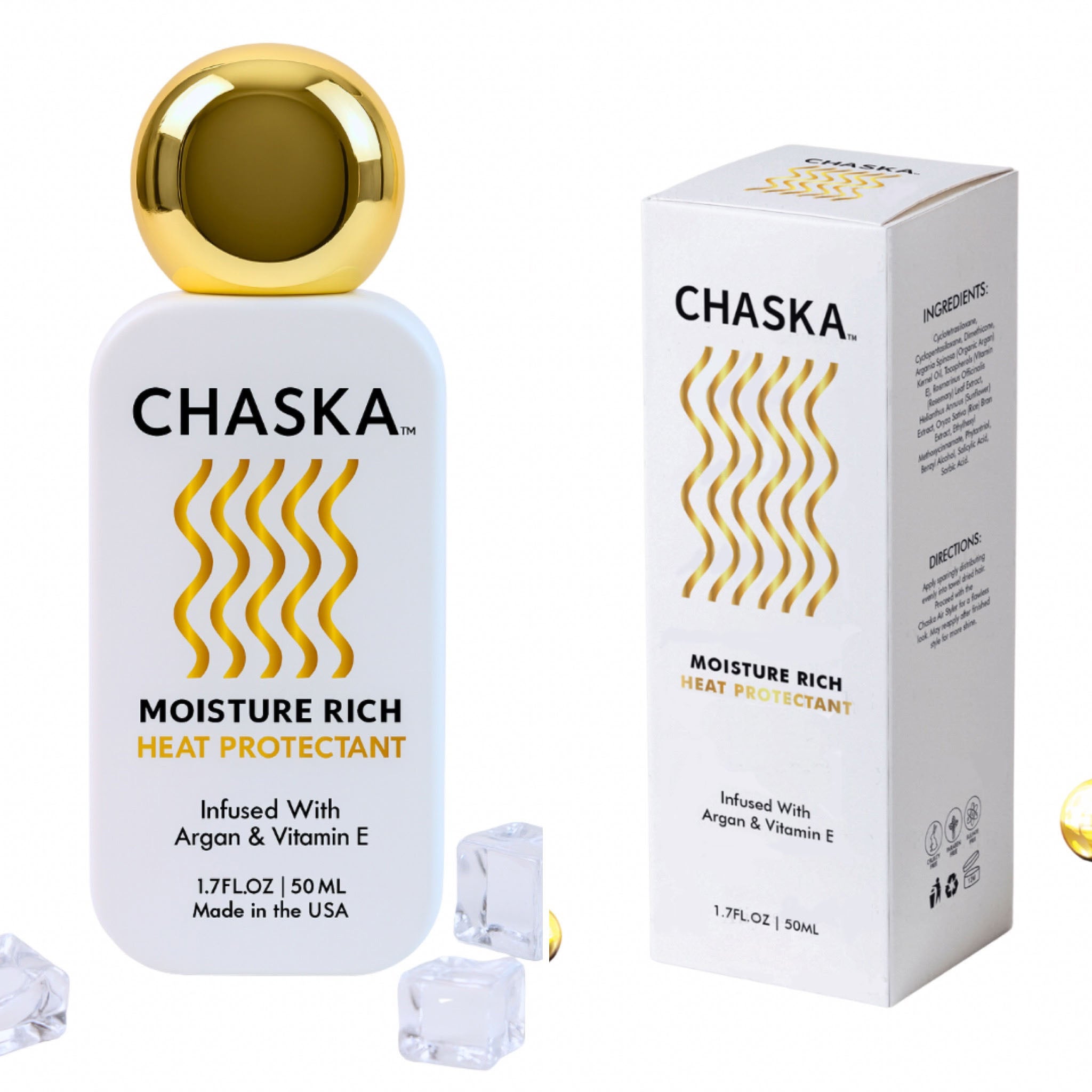
If you plan to heat-style, apply a heat protectant first. The CHASKA Moisture Rich Heat Protectant is built for this step.
Step 5: Dry Fully, Then Break the Cast
Let the style dry completely before touching it. A gel cast feels stiff and crunchy while wet and softens into hold once dry. To break the cast, rub a drop or two of light oil between your palms and gently scrunch the ends, or press the hair between your palms without raking through the pattern.
Watch out: unraveling twists or braids while still damp produces frizz and lost definition. If the sections feel cool or damp at the center, give them more time.
How Long to Leave Deep Conditioner in Natural Hair
Leave deep conditioner in natural hair for 15 to 30 minutes for most formulas, and check the label first. Thicker, low-porosity hair often benefits from the longer end of that range.
A plastic cap traps body heat and helps the product work without extra tools. A heating cap or steam can speed things up, but more heat is not always better. Watch out: leaving conditioner on for hours does not add more moisture.
How Often to Deep Condition Natural Hair
Deep condition natural hair every one to two weeks for most textures. High-porosity hair that loses moisture fast may need it weekly, while low-porosity hair can often go two weeks or longer.
Signs you can stretch the schedule:
- Hair still feels soft days after wash day
- Styles hold their shape without extra product
- No crunch or stiffness at the ends
If your hair feels coated or heavy, you are conditioning too often. For a closer look at frequency by hair type, read our guide on how often to deep condition hair.
Homemade Deep Conditioner for 4C Natural Hair
A homemade deep conditioner for 4C natural hair usually combines a moisturizing base with a protein source and an oil. A simple starting recipe:
- 2 tablespoons of a thick conditioner or aloe vera gel
- 1 tablespoon of a plain yogurt or a small amount of protein treatment
- 1 teaspoon of olive or argan oil
- 1 teaspoon of honey for extra moisture
Mix, apply to damp hair, cover with a plastic cap, and rinse after 20 minutes. Test any new mix on a small section first. Watch out: too much protein makes coily hair feel stiff and brittle. Balance protein with moisture.
Matching Your Style to Length, Density, Porosity, and Shrinkage
When you style deep-conditioned hair, style choice should follow your hair's real behavior, not a trend. Match the style to four things: length, density, porosity, and shrinkage. The table below is a starting point, but the decision logic after it is what actually helps you pick a style you can set and keep.
| Hair Factor | What It Means | Style That Fits |
|---|---|---|
| Short length | Less than shoulder length | Wash-and-go, finger coils |
| High density | Lots of strands per inch | Twist-outs, braid-outs |
| Low porosity | Cuticle tight, resists water | Light creams, steam before styling |
| High shrinkage | Big difference wet to dry | Banded styles, stretched puffs |
How to Read Your Hair Before You Choose
Length sets your options. Under shoulder length, wash-and-go and finger coils show off the pattern and dry faster.
Density sets your section size.
Porosity sets your product weight. Low-porosity hair resists water and sits product on the surface, so light creams and steam before styling help the cuticle open.
Shrinkage sets how much stretch you need. Shrinkage is not damage. It is a sign of healthy, elastic hair.
Setting Each Style So It Holds
- Wash-and-go: Apply styler in small sections on soaking-wet hair, smooth with your palms, and diffuse on low heat or air-dry. Do not touch until dry.
- Twist-out: Twist damp, product-coated sections, let them dry fully, then unravel with oiled fingers. Smaller twists give more definition; larger twists give a looser, fuller shape.
- Braid-out: Braid damp sections, dry completely, then unravel and separate gently. Braid-outs stretch more than twist-outs and suit high-shrinkage hair.
- Bantu knots: Knot damp sections, dry fully, then unwind. They give a tight, springy curl and work best on medium to long hair.
- Banded styles and stretched puffs: Band damp or dry sections to stretch without heat, then style. These suit high-shrinkage hair that needs length without a blow-dryer.
For curly-specific tool advice, see our guide to the best hair styler for curly hair.
Making the Style Last Overnight
Style longevity depends on how you protect the set while you sleep. A satin or silk bonnet, or a satin pillowcase, reduces friction and keeps moisture in.
In the morning, refresh with a light mist of water and a small amount of leave-in rather than re-applying heavy styler.
Watch out: sleeping on cotton without protection pulls moisture out of the hair and roughens the cuticle, which undoes the smoothness you just deep conditioned for.
Avoiding Over-Conditioning, Buildup, and Heat Damage
Over-conditioning shows up as limp, coated, or mushy hair that won't hold a style. Buildup feels similar but comes from product layering without enough rinsing.
To avoid both:
- Rinse thoroughly at every wash day
- Use a clarifying wash every few weeks
- Keep heavy oils away from the roots
- Alternate protein and moisture treatments
Heat damage is a real risk. Keep tools on a moderate setting, use a protectant, and avoid holding heat on one section for long. Our full guide on how to avoid heat styling damage covers temperatures, protectants, and technique in detail.
Build Your Post-Conditioning Styling Kit with The Chaska Life
A styling kit should do three things: protect, dry, and shape, without a drawer full of separate tools. That is exactly the problem the CHASKA Air Styler was built to solve.
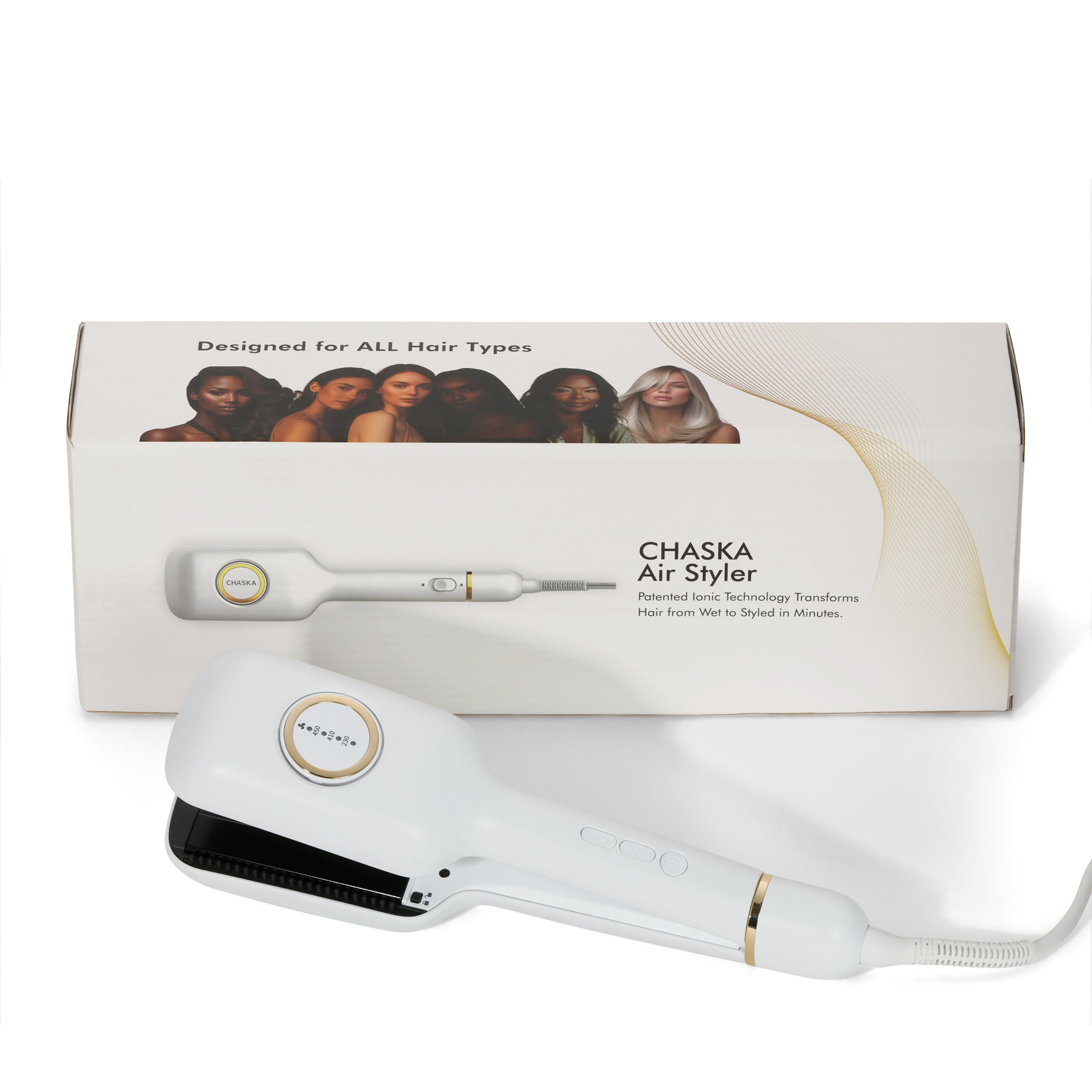
The Air Styler is a 3-in-1 tool that dries, straightens, and curls.
Pair it with the Moisture Rich Heat Protectant before styling for a two-step routine.
Deep-conditioned hair is at its most receptive right after rinsing, and that window is where good styling either holds or falls apart.
Frequently Asked Questions
Should you rinse out deep conditioner before styling natural hair?
Yes, rinse it out unless the label says it is a leave-in. Deep conditioners are formulated to be washed out after the processing time, and leaving them in can weigh hair down and encourage product buildup. Rinse with lukewarm water until the water runs mostly clear, then squeeze out excess water with a cotton T-shirt or microfiber towel before applying leave-in and styler. If your scalp was not dirty or oily, a rinse may be enough before conditioning, per Healthline guidance.
How often should you deep condition natural hair?
Most naturals do well with once a week, and high-porosity or heat-styled hair may need it every wash day. Low-porosity hair can often go two weeks between treatments. Watch for signs of over-conditioning, like hair that feels mushy or limp when wet. If that happens, cut back and use a lighter conditioner for a few wash days. Pairing deep conditioning with a heat protectant before styling, such as CHASKA Moisture Rich Heat Protectant ($24.00), helps you keep the moisture you just added.
How do you keep deep-conditioned natural hair from getting frizzy?
Frizz usually comes from styling hair that is too wet, too dry, or handled too much. After rinsing, apply leave-in to damp hair, seal with a light oil, then add styler section by section. Smooth each section with your fingers or a comb before letting it set. Dry with a diffuser on low heat or air-dry, and avoid touching the hair until it is fully dry. A heat protectant applied before any hot tool also helps lock in smoothness and reduce humidity-driven frizz.
Can you style natural hair after deep conditioning with a hot tool?
You can, but prep matters. Deep conditioning leaves the cuticle smooth and moisture-rich, which makes hair more flexible, but heat still needs a barrier. Apply a heat protectant to damp or dry hair before blow-drying, straightening, or curling. Use the lowest heat that gets the job done, keep the tool moving, and do not repeat passes over the same section. A multi-function tool like the CHASKA Air Styler ($249.00) combines drying, straightening, and curling in one tool.
