


Can Air Stylers Replace Flat Irons? A Honest Comparison
Table of Contents
- How Air Stylers Differ From Traditional Flat Irons
- Air Styler vs Flat Iron for Frizzy Hair: Which Delivers Better Results
- Benefits of Air Styling for Hair Health and Damage Prevention
- Styling Versatility: What You Can and Cannot Do With an Air Styler
- How to Curl Hair With Air: Techniques That Actually Work
- Performance Across Hair Types: Thick, Curly, and Fine Hair
- The Real Answer: Can Air Stylers Replace Flat Irons?
- Conclusion
Last Updated: August 25, 2026
How Air Stylers Differ From Traditional Flat Irons
Air stylers and flat irons operate on fundamentally different heat delivery mechanisms. A flat iron uses direct heat plates pressed against your hair shaft, while an air styler combines heated airflow with gentler contact to dry, straighten, and curl simultaneously.
The coanda effect, the principle that air naturally curves around objects, makes air styling possible. When heated air flows around your hair strands at the right velocity, it creates a wrapping effect that straightens or curls without the intense, concentrated heat of metal plates. Traditional flat irons rely on direct thermal contact, which works fast but concentrates thermal damage on the exact surface touching your hair.
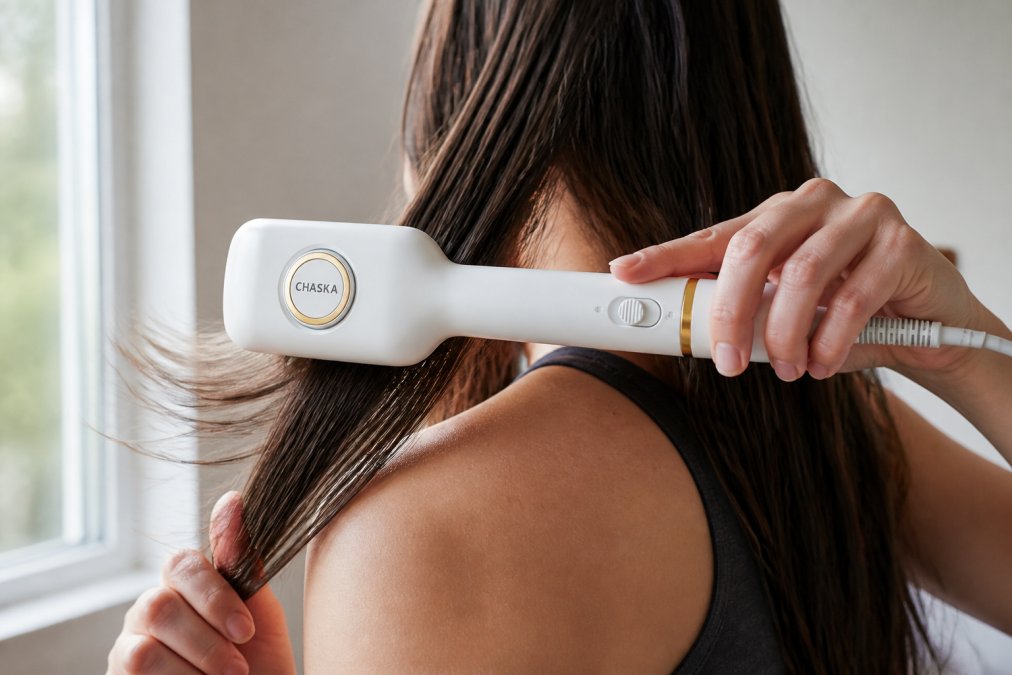
Ergonomically, flat irons require clamping sections of hair between heated plates and pulling downward, a repetitive motion that stresses your hair and wrist over time. Air stylers feel more like blow-dryers with styling attachments; you direct airflow rather than apply clamping pressure.
Heat settings also differ. Most flat irons operate at 250-450°F (the FDA). Air stylers often offer more granular control, with some models allowing adjustments in 10-20°F increments. This precision matters for fine or damaged hair.
The real trade-off: speed versus gentleness. Flat irons straighten thick or curly hair faster because direct heat and pressure work aggressively against the hair's natural texture. Air stylers take longer but achieve results with less thermal stress.
Air Styler vs Flat Iron for Frizzy Hair: Which Delivers Better Results
For frizzy hair, the choice hinges on moisture retention and cuticle health. Frizz occurs when the hair cuticle raises and moisture escapes. A flat iron's direct heat temporarily seals the cuticle, creating a smooth finish, but this effect diminishes once your hair cools and encounters humidity.
Air stylers approach frizz differently. By using airflow rather than pressure, they dry and style hair while maintaining lower surface temperatures overall. This gentler approach means less cuticle disruption, resulting in longer-lasting frizz control because you're not opening and closing the cuticle as aggressively.
Flat irons still have an edge for immediate, dramatic frizz smoothing on very thick or densely textured hair. If your goal is a sleek, glass-like finish for a specific event, a flat iron delivers that faster. The trade-off is higher concentrated heat, which compounds over repeated use.
Hair porosity matters here. Low-porosity hair responds better to air styling because gentler heat doesn't force the cuticle open unnecessarily. High-porosity hair benefits from flat iron heat's temporary sealing effect, but it suffers more from repeated thermal stress. If you have high-porosity frizzy hair and style daily, an air styler may prevent long-term damage even if immediate frizz control feels less dramatic.
Benefits of Air Styling for Hair Health and Damage Prevention
The core benefit of air styling is reduced thermal damage over time. Air stylers distribute heat across a larger surface area and rely on airflow rather than pressure, so peak temperature exposure is typically lower than with a flat iron.
Hair damage accumulates through repeated cycles of protein denaturation and moisture loss (peer-reviewed research). Air stylers, operating at lower peak temperatures and distributing heat evenly, slow this degradation. For people who style daily, this translates to hair that remains stronger, shinier, and more resilient longer.
The airflow component also preserves the hair shaft's natural moisture balance better than direct heat. Air stylers, especially those with ionic or plasma technology, help lock moisture in while styling. This is why people often report their hair feels softer and looks shinier after using an air styler.
Tension reduction during styling is another health benefit. Flat irons require downward pressure and pulling sections taut, which weakens the hair shaft and stresses the follicle. Air stylers require minimal tension; you're mostly guiding airflow. For people with fragile hair or concerns about hair loss, this gentler approach reduces significant stress on your strands.
Styling Versatility: What You Can and Cannot Do With an Air Styler
Air stylers excel at versatility within a specific range. Most can dry, straighten, and curl your hair, making them genuinely multi-functional. The Chaska Life Air Styler, for example, handles all three functions with specialized attachments, eliminating the need to carry separate tools.
However, versatility has limits. If you need extremely tight, defined curls like those from a small-barrel curling iron, an air styler may not deliver that precision. Air stylers create looser waves and curls because the airflow mechanism doesn't grip hair the way a heated barrel does.
Straightening capability varies by hair type. On fine or straight hair, air stylers straighten beautifully. On very thick, densely curly, or coily hair, an air styler can straighten but requires more passes and time than a flat iron. If you have 4C or 4D hair texture and need reliable, fast straightening, a flat iron remains more efficient.
The root lift and volume-building capability of air stylers is genuinely different from flat irons. Because you're working with airflow, you can direct air upward at the roots to create lift and body. For people wanting voluminous styles, textured waves, or root-lifted looks, air stylers are superior.
How to Curl Hair With Air: Techniques That Actually Work
Curling with an air styler requires a different approach than using a curling iron. You're using airflow to create tension and wrap, then allowing that tension to set into a curl shape as the hair cools.
The foundational technique is the "wrap and hold" method. Section your hair, wrap it around the air styler barrel or attachment, and direct the airflow through the wrapped section. Hold this position for 10-15 seconds while the heat sets the curl. Release gently. The airflow does half the work, creating softer, more natural-looking curls than traditional tools.
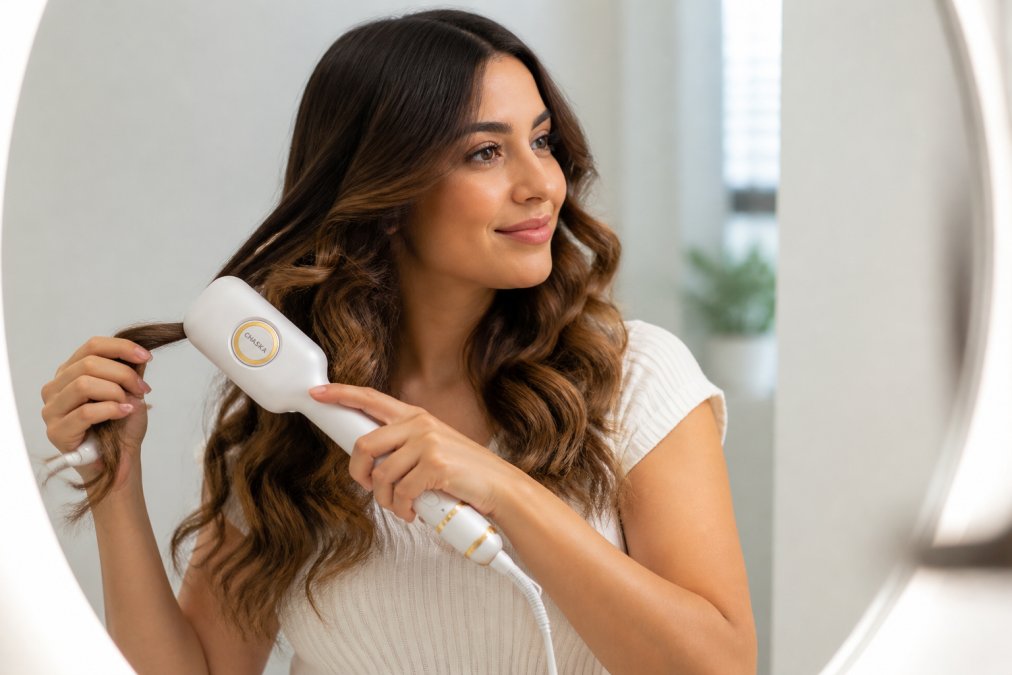
For tighter curls, use smaller sections and wrap more tightly. For looser waves, use larger sections and wrap loosely. The technique is more forgiving than with a curling iron because the airflow actively helps form the curl.
Timing matters. After you release the curl, let it cool for at least 10 seconds before touching it. This allows the hair's structure to set. Rushing this step results in curls that drop faster.
Avoid using too much tension. Air stylers work best when you guide hair gently into the curl shape. Excessive tension combined with heat can cause breakage, especially on compromised hair.
Performance Across Hair Types: Thick, Curly, and Fine Hair
Thick hair responds well to air stylers. Thick, straight hair straightens beautifully and often faster than expected. Thick, curly hair is where air stylers show limits; they can straighten or wave it, but aren't as aggressive as flat irons. Air stylers work better for thick hair when your goal is texture control rather than complete straightening.
Curly hair benefits from air styling's gentler approach. The airflow helps define curl patterns without the heat damage from flat irons. For people with natural curls who want to enhance them rather than eliminate them, air stylers are excellent. They dry curly hair while maintaining curl definition.
Fine hair is where air stylers truly shine. Fine hair is vulnerable to thermal damage because there's less hair mass to distribute heat across. Air stylers' lower peak temperatures mean fine hair stays healthier longer. Fine hair also benefits from the volume and lift that airflow creates. Use moderate heat and airflow settings, as fine hair can over-dry quickly.
The Chaska Life Air Styler is engineered to handle all three hair types with its 3-in-1 functionality, adjustable heat settings, and airflow technology.

The Real Answer: Can Air Stylers Replace Flat Irons?
The honest answer depends on your specific hair goals and daily routine. For most people with most hair types, an air styler can replace a flat iron.
If your primary goals are to dry, style, and add texture while minimizing heat damage, an air styler can absolutely replace a flat iron. You'll get salon-quality results with less thermal stress. Styling speed might be slightly slower, but the trade-off in hair health is worth it for most people.
If you need bone-straight, glass-smooth finishes regularly, or if you have very thick, densely textured hair requiring aggressive heat and pressure, a flat iron will still outperform an air styler.
The versatility factor tips the scale toward air stylers for most users. A single tool that dries, straightens, and curls eliminates tool clutter and decision fatigue. The Chaska Life Air Styler exemplifies this, replacing three separate tools, which saves time, money, and space.
The learning curve is minimal. If you've used a blow-dryer and flat iron, you can use an air styler effectively within one or two attempts.
One final consideration: cost. A quality air styler costs more upfront than a basic flat iron, but less than buying a separate blow-dryer, flat iron, and curling iron. If you're replacing three tools with one, the economics work in favor of air stylers.
Air stylers can replace flat irons for most people and most styling goals. They deliver salon-quality results with less hair damage, greater versatility, and genuine convenience. The Chaska Life Air Styler combines all three functions, drying, straightening, and curling, in one intuitive device engineered for all hair types. If you're ready to simplify your routine while protecting your hair health, this is the tool that makes it possible. Get started with The Chaska Life Air Styler and experience the difference that thoughtful tool design makes in your daily styling.
Frequently Asked Questions
Can air stylers achieve the same sleek, straight results as a flat iron?
Air stylers can deliver sleek results, but the mechanism differs. Flat irons use direct heat and pressure on the hair shaft to clamp and straighten, while air stylers rely on airflow and coanda effect to smooth the cuticle. For very thick or coarse hair, a flat iron typically provides more tension and faster straightening. Air stylers excel on medium to fine hair and work best when hair is damp or partially dry. The Chaska Air Styler's patented heat plate for the ultimate 3-in-1 styling solution to dry, straighten and curl your hair faster! It is the only styling tool on the market with d
Is air styling technology actually healthier for hair than flat irons?
Air styling can be gentler because it doesn't apply direct heat and pressure simultaneously across the hair shaft. This reduces thermal damage and breakage, especially with repeated use. However, health depends on technique and heat settings. Air stylers distribute heat more evenly through airflow, which helps preserve moisture retention and cuticle health. Flat irons concentrate heat in one spot, which can cause damage if temperatures exceed 350°F or if hair is too wet. Both tools require heat protection products and proper technique to minimize damage.
Which hair types benefit most from switching to an air styler?
Fine, wavy, and medium-textured hair respond best to air stylers. The airflow technology reduces frizz and enhances natural texture without the weight that direct-heat tools can leave. Curly hair benefits from the coanda effect, which creates defined curls with less tension. Thick and coarse hair may need a flat iron for maximum straightening power, though air stylers work well for drying and initial smoothing. People with damaged or color-treated hair often see the most improvement because air styling reduces further thermal stress on already-compromised hair.
Can you use an air styler on damp hair, or does it need to be completely dry?
Air stylers work on damp hair, in fact, that's when they shine. The combination of airflow and heat dries and styles simultaneously, cutting styling time significantly. Starting with damp hair allows the tool to set the style while moisture is still present, which helps with frizz control and lasting results. Completely dry hair requires more heat and time to achieve the same effect. The Chaska Air Styler's Twin Turbo fans are designed to handle damp hair efficiently, making it ideal for busy routines where you need to dry and style in one step.
This article was written using GrandRanker