


7 Signs of Protein Overload in Hair and How to Fix It
Last Updated: October 28, 2026
Quick Summary
The signs of protein overload in hair include a straw-like, crunchy texture, stiffness, loss of elasticity with snapping strands, dullness, breakage, product buildup, and hair that resists conditioner. Fix it by stopping all protein products, clarifying once, and reintroducing moisture before slowly adding one protein product back.
- Run the stretch test on clean, damp strands: hair that snaps early points to protein overload.
- Clarify no more than once a week, since over-clarifying strips oils and worsens dryness.
- Protein hides in shampoo, leave-in, styler, heat protectant, and oil, so audit every category.
- Pause all protein products for two to four wash days before reintroducing one at a time.
- See a dermatologist if shedding is sudden, patchy, or comes with scalp itching, redness, or pain.
Table of Contents
- Protein Overload Hair Symptoms: 7 Signs to Watch For
- What Protein Overload Actually Means and Where the Concept Is Uncertain
- Protein Overload vs Moisture Overload: How to Tell the Difference
- How to Fix Protein Overload in Hair: A Staged Recovery Plan
- Protein Overload Curly Hair: Why Texture and Porosity Change the Signs
- How to Read Ingredient Labels and Track Protein Across Products
- When to See a Dermatologist About Breakage or Shedding
- Build a Moisture-Safe Styling Routine with The Chaska Life
- Frequently Asked Questions
Protein Overload Hair Symptoms: 7 Signs to Watch For
If your hair feels stiff, snaps without warning, and refuses to absorb conditioner, you may be dealing with protein overload, one of the most misunderstood problems in hair care.
Here's the uncomfortable truth most guides skip: the term "protein overload" is not a formal medical diagnosis. Curlsbot has argued that the condition as commonly described online is not scientifically established, even though the symptoms people report are real.
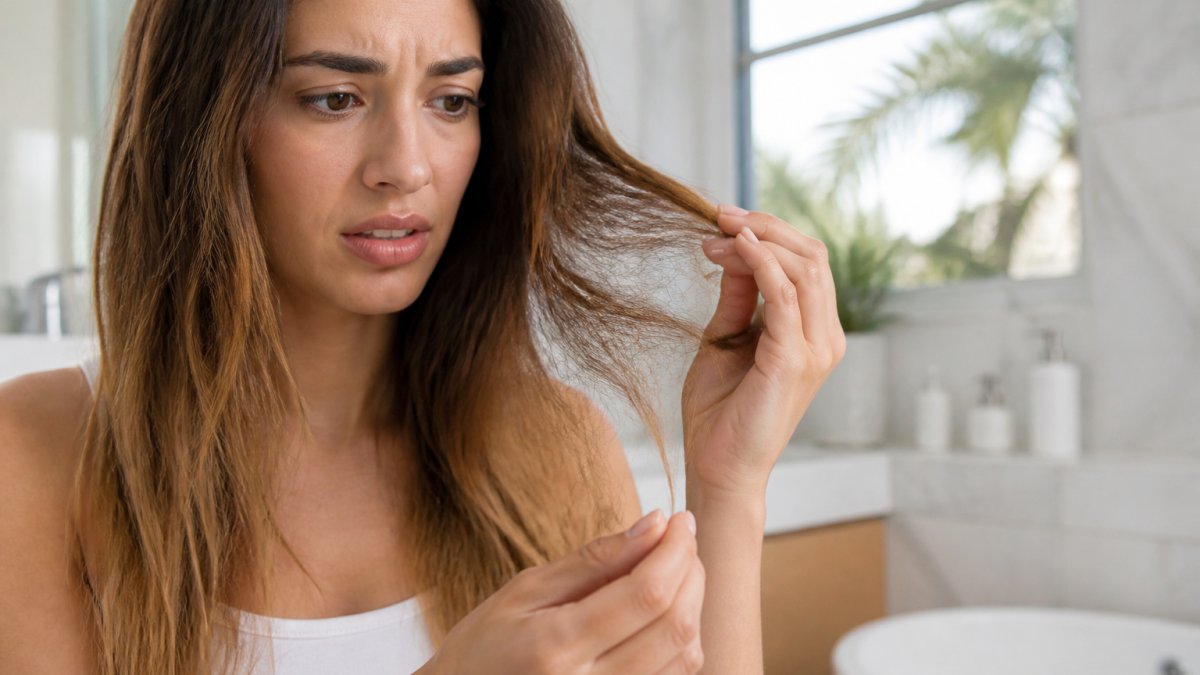
1. Straw-Like, Crunchy Texture
Dry, brittle, straw-like hair is the classic first clue. The hair shaft feels rough to the touch, even after washing. It looks dry but won't soften with your usual conditioner. That crunchy feel is your signal to check your product lineup before you add another treatment.
2. Stiffness and Roughness
Stiff hair loses its natural movement. It holds a shape too rigidly and feels coarse when you run your fingers through it. A common mistake is layering on more protein masks to "fix" the stiffness, which only makes the problem worse.
3. Loss of Elasticity and Snapping
Healthy hair stretches and bounces back. Overloaded hair snaps. Try the stretch test: take one wet strand and pull gently. If it breaks before stretching much at all, elasticity is low. Many stylists describe this as a loss of stretch under roughly 10 percent before breakage.
4. Dullness and Coarse Texture
Protein-heavy products can build up on the surface, blocking light reflection. The result is dull hair with a coarse texture that no shine serum seems to fix. If your hair looks flat and feels rough at the same time, that combination points toward buildup.
5. Breakage and Shedding
Breakage is the sign that gets people's attention. Short broken pieces show up in the sink and on your pillow. Some shedding is normal, but snapping mid-strand is different from shedding at the root. Look closely at where the hair breaks.
6. Product Buildup and Residue
A filmy coating that survives washing is a red flag. Protein-containing products layer on top of each other, and without a clarifying shampoo, that residue accumulates. If your hair feels coated no matter what you do, buildup is likely part of the story.
7. Under-Moisturized Hair That Resists Conditioner
The final sign is the most frustrating. You apply a moisturizing conditioner or hair mask, and your hair seems to reject it. Under-moisturized hair that resists deep conditioning needs moisture rebalanced, not more protein.
What Protein Overload Actually Means and Where the Concept Is Uncertain
Protein overload describes hair that has taken on more protein than it can use, leaving it stiff, rough, and prone to breakage.
The uncertainty matters. There is no clinical test for protein overload. The concept comes from stylists and hair communities describing a pattern of symptoms, not from dermatology research. That doesn't make your crunchy, snapping hair imaginary.
Protein Overload vs Moisture Overload: How to Tell the Difference
Protein overload and moisture overload can look alike from a distance, but they pull in opposite directions. Protein overload makes hair stiff, rough, and quick to snap. Moisture overload, sometimes linked to hygral fatigue, makes hair limp, mushy, and overly stretchy. Correcting this imbalance requires a careful approach to hair recovery steps that restore the structural integrity of your strands.
| Feature | Protein Overload | Moisture Overload |
|---|---|---|
| Feel | Stiff, rough, crunchy | Soft, limp, mushy |
| Stretch test | Snaps early | Stretches too far |
| Look | Dull, coarse | Flat, weighed down |
| Fix | Clarify, add moisture | Add protein, reduce heavy conditioning |
Run the Stretch Test Before You Change Anything
The stretch test is the fastest way to separate the two. Work on clean, damp hair, not soaking wet and not dry.
- Snaps almost immediately, with little stretch: elasticity is low, which points toward protein overload.
- Stretches well past its resting length and stays stretched, or feels gummy: too much moisture, which points toward moisture overload.
- Stretches a little, then snaps cleanly: closer to balanced; look at texture and shine instead.
Repeat on three or four strands from different areas. A single strand can be misleading, especially if it came from a section you style more often.
The Tie-Breaker: What Happens When You Add Water
If the stretch test is ambiguous, watch how your hair responds to plain water and a light moisturizing conditioner. Hair with protein overload often feels rougher and more resistant after wetting, and conditioner seems to sit on top rather than sink in. Hair with moisture overload tends to feel softer and stretchier when wet, then collapses and looks stringy as it dries.
Why the Two Get Confused
Both problems share surface symptoms: dullness, breakage, and hair that stops responding to your usual routine. The difference is mechanical.
If you're unsure which styling tools are gentlest on fragile hair while you sort out the cause, our guide to the least damaging hair styling tool for fine hair is a useful reference.
CHASKA Moisture Rich Heat Protectant →
How to Fix Protein Overload in Hair: A Staged Recovery Plan
Fixing protein overload in hair takes patience, not a single product.
Stage 1: Stop All Protein and Clarify
Read every label and set aside anything with protein. Then use a clarifying shampoo once to strip residue. Watch out: clarifying too often strips natural oils and makes dryness worse, so keep it to once a week at most.
Stage 2: Reintroduce Moisture
Switch to a moisturizing conditioner and a deep conditioning mask on wash day. If you're wondering whether a leave-in can help, read our breakdown of whether a leave-in conditioner can repair heat-damaged hair. Stop when hair feels soft and stretches normally again.
Stage 3: Protect and Rebalance
Once hair is rebalanced, protect it before styling. A moisture-rich primer like CHASKA Moisture Rich Heat Protectant ($24.00) smooths strands and adds a protective layer. It pairs with the CHASKA Air Styler, which dries, straightens, and curls. If you're weighing gentler styling, our comparison of whether air stylers can replace flat irons covers the trade-offs.

Protein Overload Curly Hair: Why Texture and Porosity Change the Signs
Curly hair shows protein overload differently. Tight curl patterns already feel coarser, so stiffness is easy to miss. Low-porosity curls absorb protein slowly and build up faster. Curly readers rebuilding a routine should also check our guide to the best hair styler for curly hair before adding heat back in.
How to Read Ingredient Labels and Track Protein Across Products
The fastest way to fix protein overload is to count protein everywhere, not just in masks. Most people find it in three or four products at once, which is why swapping one mask rarely solves the problem. Use this audit to find every source before you change your routine.
Step 1: Know the Ingredient Names
Protein appears on labels under many names. Scan the full ingredient list, not just the front of the bottle, for these common entries:
- Hydrolyzed proteins: hydrolyzed wheat protein, hydrolyzed rice protein, hydrolyzed quinoa, hydrolyzed silk, hydrolyzed keratin, hydrolyzed collagen, hydrolyzed soy protein, hydrolyzed oat protein.
- Protein-derived ingredients: amino acids, silk amino acids, wheat amino acids, keratin amino acids, collagen amino acids.
- Trade-name proteins: look for the words "protein," "peptide," or "amino acid" anywhere in the list. Peptides are short protein fragments and count toward your total.
A product can list protein under a name you don't recognize, so read the whole list rather than searching for one word.
Step 2: Audit Every Product Category
Protein hides in more places than deep conditioners. Go through each category you use and mark yes or no:
- Shampoo and co-wash
- Conditioner (rinse-out)
- Leave-in conditioner or detangler
- Deep conditioning mask
- Styling cream, gel, or mousse
- Heat protectant
- Hair oil or serum
- Dry shampoo
- Edge control or finishing product
Most routines contain protein in at least two categories, often a leave-in plus a styling product plus a mask. Those small amounts add up across a wash cycle.
Step 3: Track Cumulative Use
Keep a simple list of every product you use and mark which ones contain protein. Then note how often each one touches your hair in a typical week. A protein leave-in used daily contributes more total protein than a mask used once a month, even if the mask has a higher concentration.
Step 4: Set a Pause List and a Reintroduction Rule
Once the audit is done, set aside every protein-containing product for two to four wash days. After hair feels soft and stretches normally again, reintroduce one protein product at a time, no more than once a week, and watch for stiffness returning. That single-product-at-a-time rule is what prevents the cycle of overcorrecting in both directions.
When to See a Dermatologist About Breakage or Shedding
Most breakage from protein overload improves with the plan above. See a dermatologist if shedding is sudden, patchy, or comes with scalp itching, redness, or pain. According to the American Academy of Dermatology's guidance on hair loss, sudden or patchy hair loss deserves a professional look.
Build a Moisture-Safe Styling Routine with The Chaska Life
Rebuilding moisture is only half the job. The other half is keeping heat and friction from undoing your progress.
The CHASKA Air Styler ($249.00) is designed to dry, straighten, and curl with one tool.
Get started with The Chaska Life and give your hair a routine that protects moisture instead of fighting it.
Frequently Asked Questions
What are the symptoms of protein overload in hair?
The most common signs include a rough, straw-like texture, stiffness, reduced elasticity, dullness, and breakage. Hair may feel crunchy or snap easily when wet, and it often resists moisturizing products. You may also notice increased shedding and product buildup. These signs overlap with dryness and damage.
How long does it take to recover from protein overload?
Recovery usually takes two to four weeks of consistent moisture-focused care, though severe cases may need longer. Stop protein treatments, clarify once to remove buildup, and switch to moisturizing conditioner and a deep conditioning hair mask weekly. Track how your hair feels after each wash day. If stiffness and snapping do not improve after a month, see a dermatologist to rule out other causes of breakage.
Can protein overload cause hair breakage and shedding?
Yes. When hair loses elasticity, it snaps under tension during combing, styling, or even washing, which shows up as breakage. Shedding can increase too, because brittle strands break closer to the root. A stretch test helps: healthy wet hair stretches about 10 percent or more before returning. Hair that breaks with less than 10 percent stretch points to protein overload rather than normal shedding.
How do you fix protein overload in curly hair?
Pause protein-containing products, use a clarifying shampoo once to clear buildup, then focus on moisture with a deep conditioning mask and a leave-in moisturizing conditioner. Avoid rice water and protein treatments for at least two weeks. Curly hair often needs extra moisture because of its porosity, so check labels on every product, including stylers. Reintroduce one protein product only after elasticity returns.
